
The sea breeze carried the usual salty tang, but today, it felt heavy with a story of silent suffering. I was walking along Trebarwith Strand, the rugged north Cornwall coast stretching before me, a place I often sought for solace. But on this day in 2025, the solace was shattered. My eyes fell upon a sight that would haunt me for years to come—a tiny, motionless form on the sand, a six-to-eight-week-old gray seal pup, its story cut tragically short by human carelessness. This wasn't just a statistic; this was a life, a potential snuffed out by the ghostly remnants of our disposable culture. It hit me right in the gut.
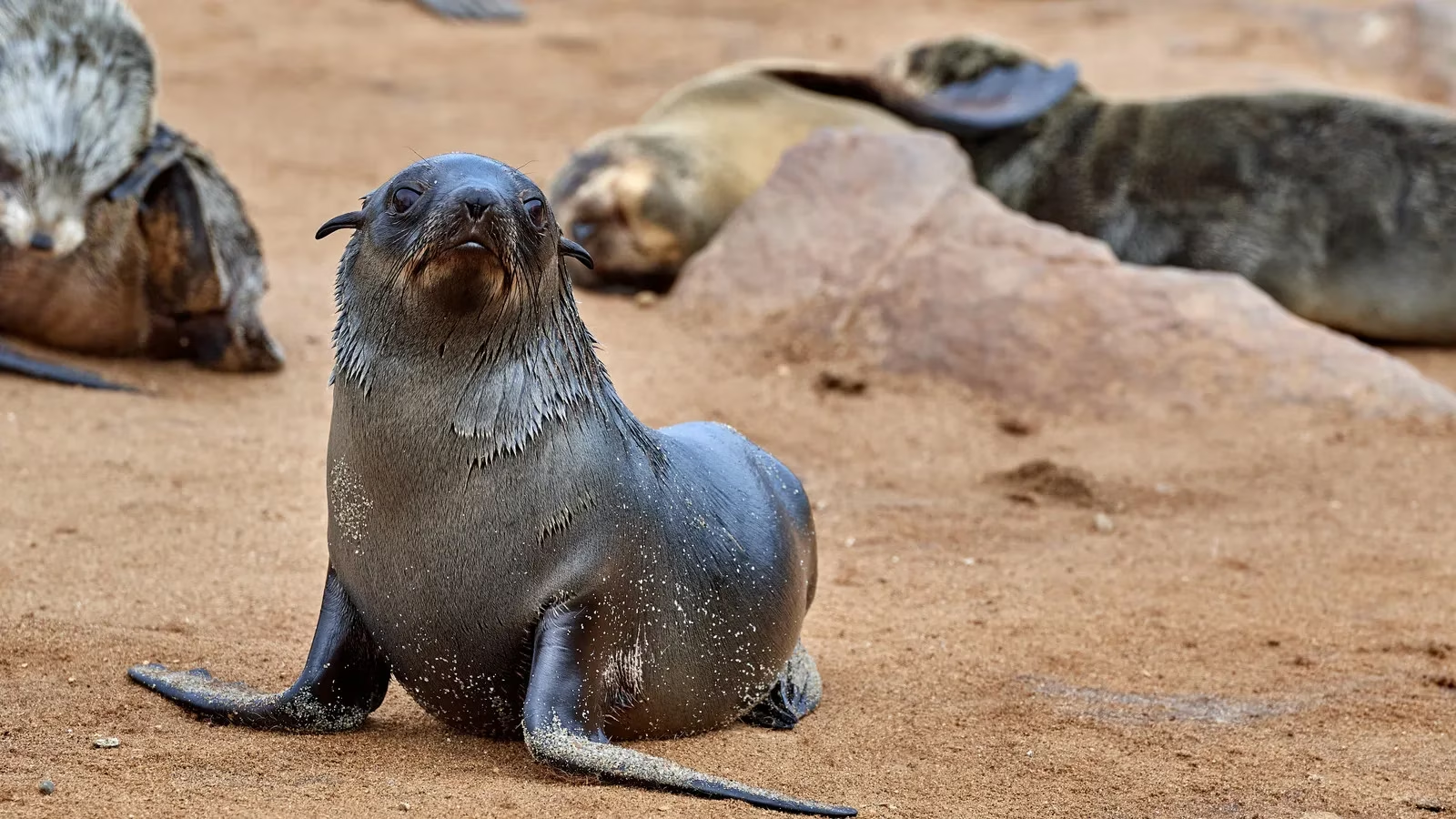
When the marine rescue team arrived, the full horror became clear. This little guy, who should have been learning to swim and play, was ensnared in a cruel trap of discarded fishing gear. The visible wounds were bad, but the internal damage was a nightmare. Two fishing hooks had punctured clean through his front and rear flippers, connected by a single, unyielding line. Can you imagine the agony? The constant pulling, the chafing, the infection setting in? Experts later told me the pain would have been excruciating, a relentless torture for a creature so young. It's a stark reminder that what we toss away carelessly doesn't just 'go away'—it becomes a weapon.
The Journey to the Cornwall Seal Hospital was a race against time, but sadly, time had already won. The internal trauma was too severe. The dedicated staff at the hospital, folks with hearts of gold, did their level best. But the damage was catastrophic. The loss of teeth that would never regenerate meant open, festering wounds, a direct ticket to a debilitating and fatal infection. The heartbreaking but merciful decision was made to euthanize him. Let that sink in: a vibrant life ended because someone couldn't be bothered to dispose of their tackle properly. It's a tough pill to swallow.
This pup's story is not an isolated incident. It's part of a terrifying, global epidemic.
The Stark Numbers Behind the Suffering:
| Pollution Source | Contribution | Primary Impact |
|---|---|---|
| Land-based sources (agriculture, industry, litter) | ~80% | Toxic runoff, plastic ingestion |
| Maritime & Fishing activities | ~20% | Entanglement, ingestion, habitat destruction |
| Global Plastic Particles in Oceans (2023 Study) | 170 Trillion | Equivalent to 2.3 million tons |
Thousands of seal pups face this fate annually. Some survive, bearing deep physical and psychological scars—a lifetime disability from a moment of human negligence. Many, like my little friend on the beach, do not. And it's not just seals; nearly 270 species worldwide are caught in the crossfire of our pollution, from plastic litter and industrial waste to agricultural runoff and oil spills. The ocean's health is in a tailspin, and the number one culprit for oxygen depletion in our waters? You guessed it: pollution.
So, what's the deal? Are we just going to stand by and watch? Heck no. The power to change this narrative is, ironically, in the very hands that created the problem: ours.
Here’s the real talk—the 80% of marine pollution caused by humans means we hold 80% of the solution. It’s not rocket science; it's about common sense and giving a damn.
What You Can Do (No Cap):
-
Be a Beach Boss: Next time you're walking the shore and see debris, pick it up and bin it. Seriously, it takes two seconds. If it's something hazardous, call your local environmental agency. They've got the gear to handle it safely.
-
Mind Your Gear: If you fish, be fanatical about your gear. Lost or discarded nets, lines, and hooks are death traps. Recycle or dispose of them properly. Period.
-
Rethink Your Consumption: Single-use plastics are the main villains. Opt for reusables. Support brands that prioritize sustainable packaging. Every plastic bottle you refuse is a small victory.
-
Spread the Word: Talk about it. Share stories like this one. Awareness is the first step to action.
Stumbling upon that seal pup changed my perspective forever. It moved me from passive concern to active determination. That pup's silent cry on Trebarwith Strand is a cry for all of us. We can't bring him back, but we can honor his memory by ensuring fewer stories end with such a heartbreaking full stop. The ocean's fate is not sealed—unless we allow it to be. Let's roll up our sleeves and clean up our act. For him, and for every creature that calls the deep blue home. 🌊💙