
In the grand, blue theater of the deep sea, patience is more than a virtue—it's a prerequisite for discovery. For fifteen long years, the crew of the EV Nautilus had been playing a high-stakes game of hide-and-seek with one of the ocean's most ancient and enigmatic residents: the Nautilus belauensis. This wasn't just any marine creature; this was a living fossil, a time traveler from over 480 million years ago that predates even the dinosaurs. Talk about a serious case of seniority! The year 2026 marks the anniversary of their monumental 2024 find, and the story of that discovery remains as electrifying as the day it happened.
The mission was simple in theory but devilishly hard in practice: find the nautilus. These cephalopods are the ultimate introverts of the reef, preferring the cool, dark solitude of deep reef slopes to avoid becoming someone else's dinner. They carry their homes—beautiful, spiraled shells—on their backs, venturing into shallower waters only for the essential tasks of feeding and egg-laying. It's a lifestyle that has worked flawlessly for eons, making them notoriously camera-shy. The EV Nautilus team, armed with cutting-edge ROVs (Remotely Operated Vehicles), had scanned countless miles of seabed, their hope waxing and waning with each dive. Their final expedition of 2024 was supposed to be just another chapter in a long book of near-misses. Spoiler alert: it was anything but.
Then, it happened. On a routine dive, the ROV's cameras illuminated not one, but four of these magnificent creatures, gliding effortlessly across the seafloor like tiny, pearlescent submarines. The control room, which had witnessed years of meticulous, quiet science, erupted. Imagine the vibe of a stadium when the home team scores a last-minute winning goal, but condensed into a research vessel's control van. Pure, unadulterated joy. Jacob Ottaviani, the video engineer on deck, later described the moment as "pretty incredible." He said, "You could feel the collective energy and childlike joy – finally seeing something everyone had been hoping to see." It was a payoff fifteen years in the making.
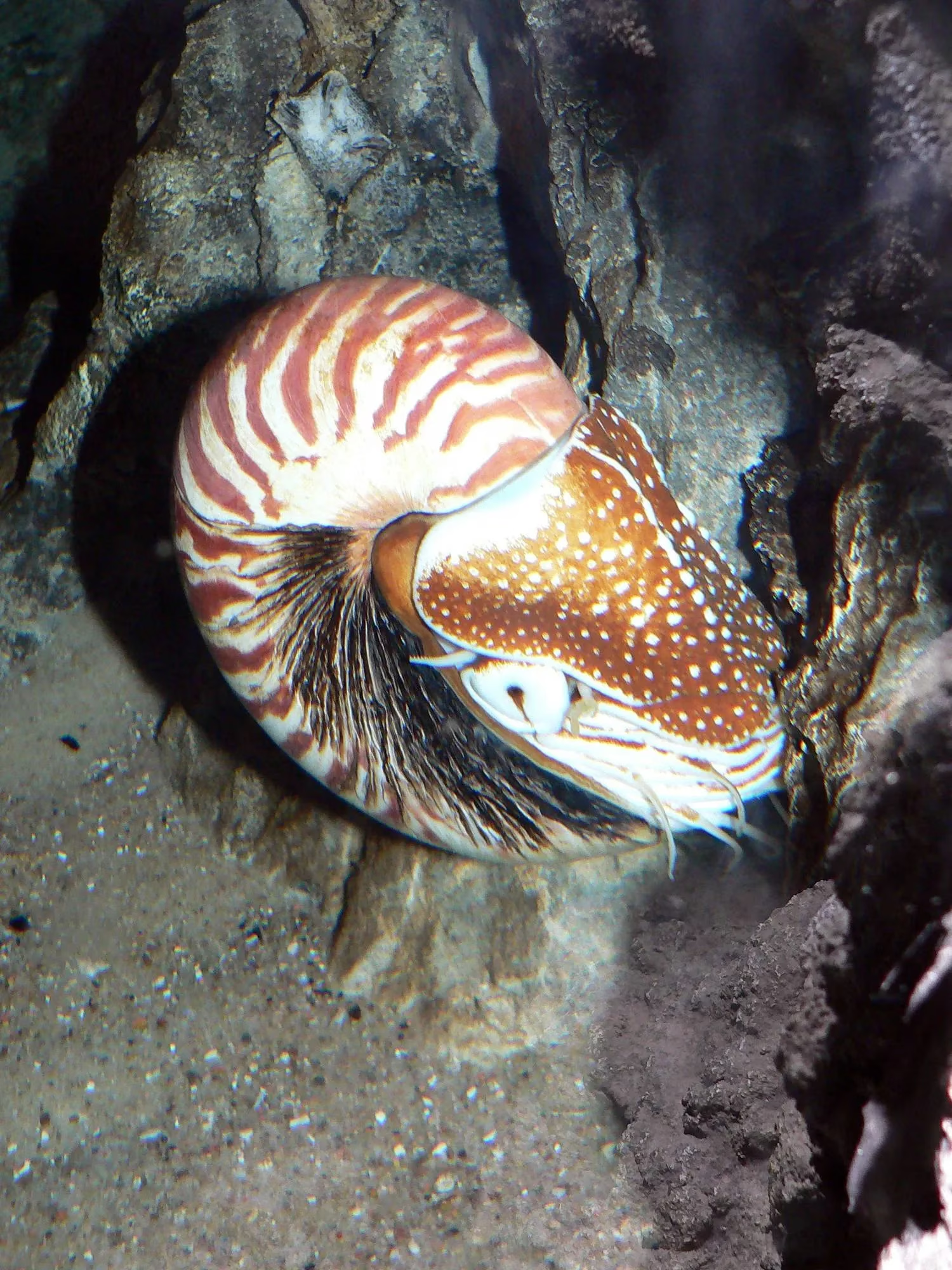
Watching the footage, even now, is mind-blowing. The nautilus moves with a serene, otherworldly grace. Its body and behaviors are virtually unchanged from its prehistoric ancestors. It's the ultimate "if it ain't broke, don't fix it" evolutionary strategy. Seeing them was like getting a direct video call from the Paleozoic Era—no Wi-Fi required.
The excitement wasn't confined to the ship. When EVNautilus shared the discovery video, the internet collectively lost its mind. The comment section became a digital party. Here’s a taste of the reactions that poured in:
-
The Marine Biologist's Dream: "As a marine biologist myself, I can only say that THIS is the energy we all want in our careers. We may be underpaid as hell but God no other area would ever make me feel this excited. Thank you for sharing with us!!! <3" (This comment basically went viral in the ocean science community).
-
The Perfect Namesake: "Congrats EV Nautilus crew for finally seeing your namesake!" (Talk about a full-circle moment!).
-
The Contagious Joy: "The unrestrained joy from the team finally getting to one made me smile so big! Awesome footage!!"
-
The Live-Stream Witness: "I was absolutely stoked to have been there during that Livestream!... Was worried we weren't going to see one but then this happened. 50/10 was incredible."
This discovery was more than just checking an item off a bucket list. It was a powerful reminder of the mysteries that still lurk in the deep and the profound, childlike wonder that drives scientific exploration. In a world that often feels like it's moving at light speed, the nautilus reminds us that some things are timeless. The 2024 discovery capped off an era for the EV Nautilus and inspired a new generation of ocean explorers. As we look at the oceans in 2026, the ghostly, beautiful spiral of the nautilus remains a symbol of patience, perseverance, and the incredible surprises waiting for those who dare to look. Now, that's what we call a mic drop moment for marine science.