
In the early days of 2025, a silent storm swept across the American landscape, its tendrils reaching into sanctuaries where wild hearts once roamed free. The avian flu, a relentless specter, had returned with renewed vigor, casting a pall over the nation's wildlife. From coast to coast, the virus whispered through the air, claiming lives in its wake, a haunting echo of nature's fragility. Amidst this turmoil, a sanctuary in Washington state became an unwitting stage for tragedy, where twenty wild cats—noble creatures of untamed grace—succumbed to the invisible foe. Their stories, etched in sorrow, speak of a world where the boundaries between species blur in the face of shared peril. 😢
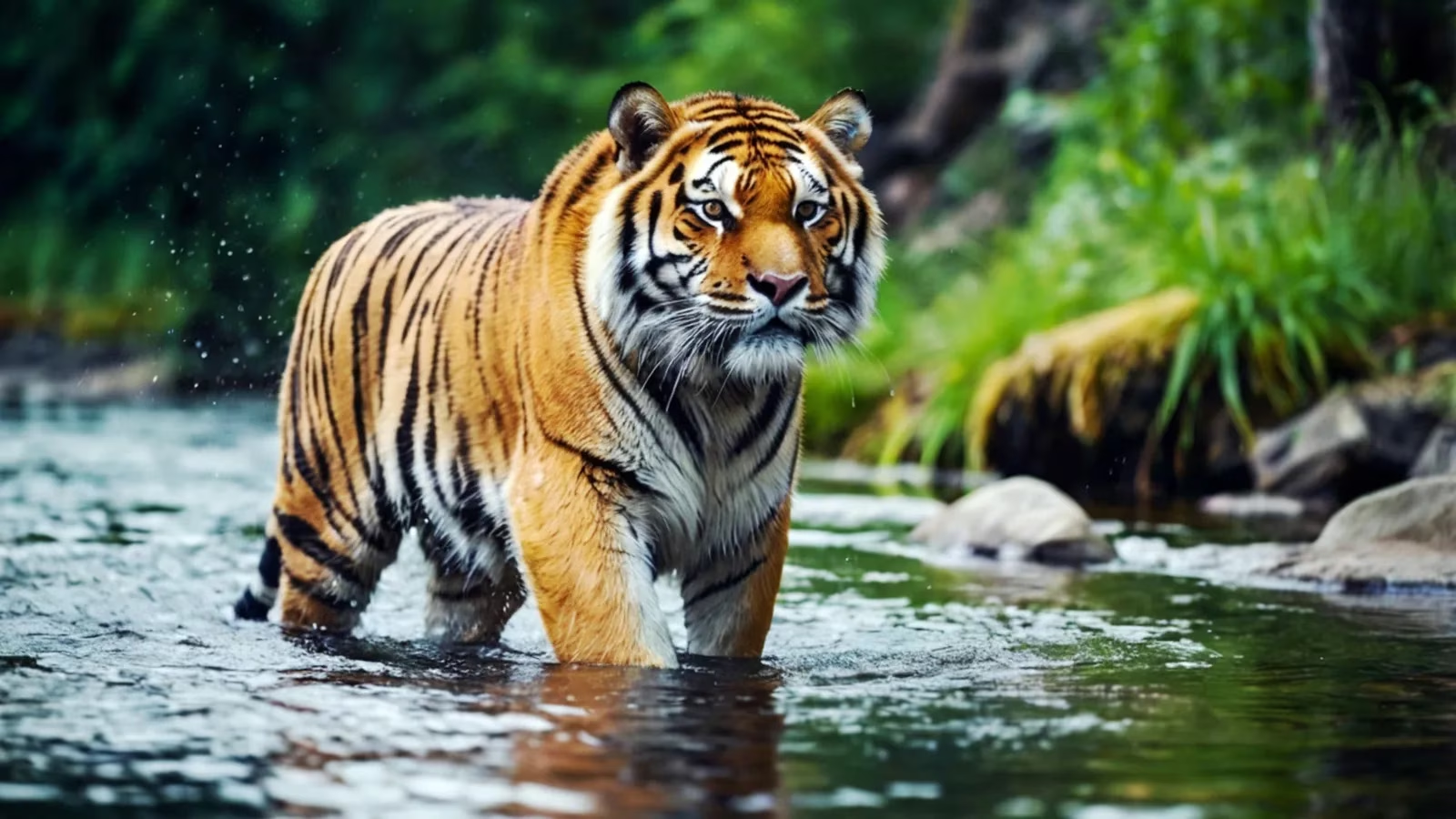
The outbreak, as recent reports confirm, has ravaged zoos and refuges nationwide, with Washington and California bearing the brunt of the highly pathogenic avian influenza virus (HPAIV), particularly the H5N1 variant. This year, the virus has not spared the vulnerable; it has danced through flocks and prowled among predators, leaving a trail of loss. At the Wild Felid Advocacy Center in Shelton, Washington, just 80 miles southwest of Seattle, the air grew heavy with grief in late 2023 and early 2024. Officials there, in a heart-wrenching announcement on social media, revealed an HPAI outbreak that claimed twenty wild cats between November and December. Each name, each breed, a testament to lives extinguished too soon: one Amur Bengal Tiger, majestic and strong; one African Caracal, sleek and elusive; one Bengal Cat, playful and curious; one Geoffroy Cat, rare and enigmatic; one Eurasian Lynx, solitary and proud; two Canada Lynx, wild-eyed and free; four Bobcats, resilient and fierce; four Cougars, powerful and silent; and five African Servals, agile and spirited. Their demise, a collective sigh in the wilderness, underscores the virus's indiscriminate cruelty. 🐾
How did this scourge infiltrate their sanctuary? The answers lie in nature's own whispers. Bird droppings, carried on the wind or settling in hidden corners, have emerged as a primary culprit, seeding the virus across habitats. Equally insidious is infected raw milk, a silent assassin that has claimed lives beyond the wild—domestic cats, too, have fallen after consuming tainted milk or pet food, once thought safe by loving guardians. This transmission, a cruel twist, blurs the lines between wild and tame, reminding us that no creature is an island. Symptoms, as noted by the American Veterinary Medical Association, paint a grim portrait: in birds, low energy, swollen limbs, uncoordinated movements, and diarrhea; in cats and dogs, fever, lethargy, and loss of appetite, often spiraling into fatal ends. The virus, like a thief in the night, steals vitality without warning.
Humanity watches from the periphery, a wary observer. The Centers for Disease Control and Prevention (CDC) maintains that the leap from birds and animals to humans poses little threat, citing 61 mild human cases in the U.S. since April 2024, all non-contagious between people. Yet, history whispers caution: in 2016, a cat transmitted the virus to a human, and more recently, a cow did the same. These echoes of past encounters serve as stark omens, urging vigilance in a world interconnected by breath and touch. The Wild Felid Advocacy Center, now shrouded in quarantine, stands closed to the public—a sanctuary turned sepulcher, awaiting the dawn of safety. 🌅
In this unfolding narrative, questions linger, like leaves in an autumn breeze.
Frequently Asked Questions (FAQ)
-
Q: What animals are most affected by the avian flu outbreak?
-
A: Endangered wildlife in zoos and sanctuaries, particularly birds and wild cats like tigers, lynxes, and bobcats, have suffered high mortality rates, with cases concentrated in states like Washington and California.
-
Q: How is the virus transmitted to animals?
-
A: Transmission primarily occurs through contaminated bird droppings or infected raw milk, which can taint food sources and environments, leading to outbreaks in diverse species.
-
Q: What are the symptoms in pets and wildlife?
-
Symptoms vary:
-
Birds: Low energy, swelling, lack of coordination, diarrhea.
-
Cats and dogs: Fever, lethargy, reduced appetite, often fatal.
-
-
Early detection is crucial, yet many cases end tragically. 😿
-
Q: Is there a risk to humans from this outbreak?
-
A: While human transmission remains rare and mild (61 cases reported in 2024), past incidents show cats and cows can infect humans, though CDC reassurances suggest low immediate threat.
-
Q: What measures are in place to contain the virus?
-
A: Affected areas, like the Wild Felid Advocacy Center, are under strict quarantine and closure, with ongoing monitoring to prevent further spread, reflecting a broader national effort.