
Imagine a future where we can predict deadly toxic algae blooms before they wreak havoc on marine ecosystems. Well, that future might be closer than we think! 🔬 Scientists have made a groundbreaking discovery that could revolutionize how we monitor and respond to these destructive phenomena. For marine animals off the coast of Southern California, this breakthrough couldn't come soon enough - they're currently dying at alarming rates due to increasingly frequent toxic algae invasions.
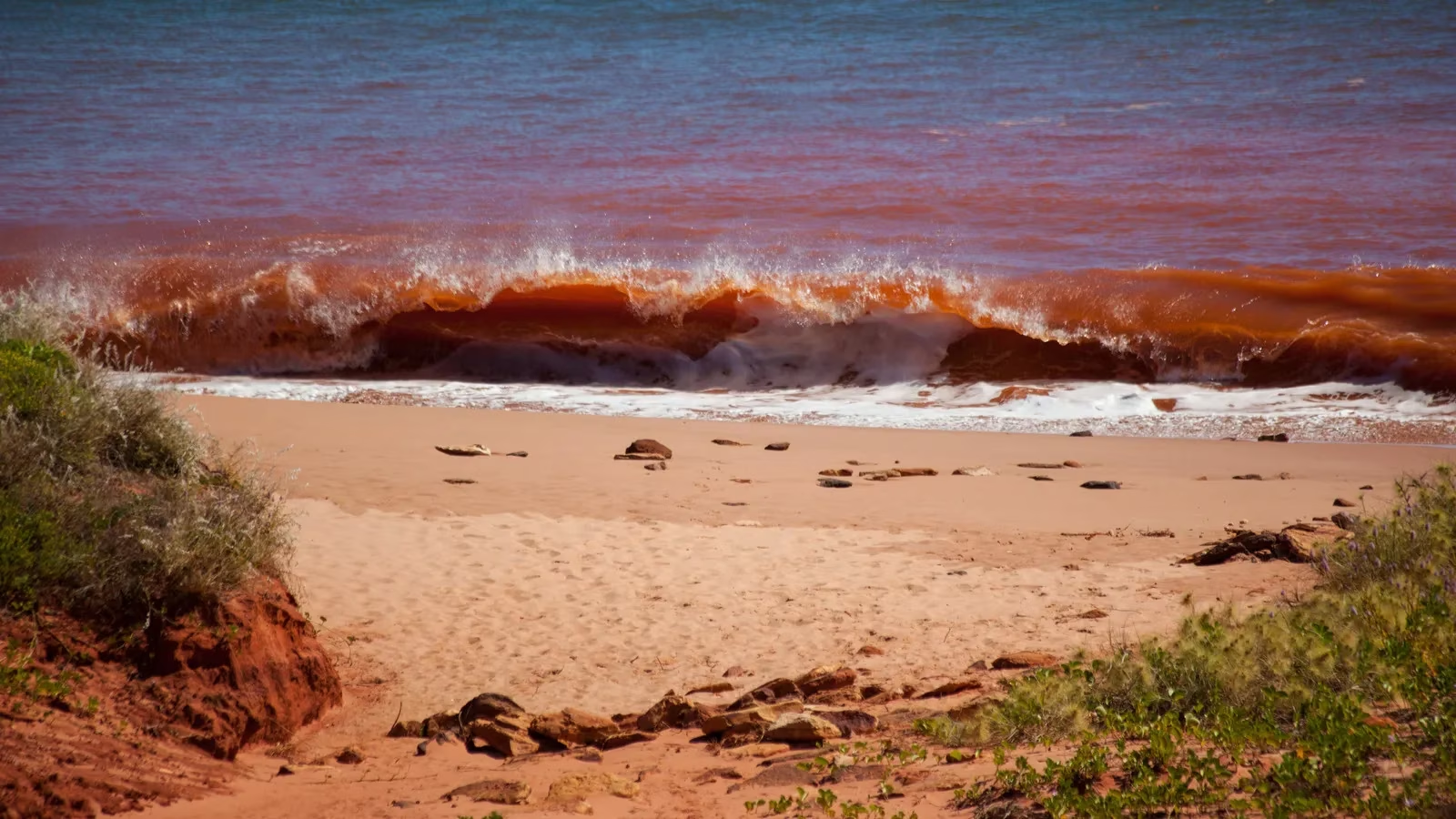
What Exactly Are Red Tides?
You've probably heard about "red tides" turning oceans crimson, but do you know what's really happening beneath the surface? 🤔 Red tides occur when colonies of algae grow completely out of control, creating massive blooms that can:
-
Turn ocean waters reddish-brown
-
Release toxins into the air and water
-
Cause serious health issues for humans
-
Create deadly conditions for marine life
These blooms have become common in coastal states like California, Florida, and Maine, but their frequency and toxicity have skyrocketed in recent years. Beachgoers might notice the warning signs when swimming is prohibited, but few understand the complex science behind these dangerous phenomena.
The Viral Breakthrough 💡
Here's where the real scientific drama unfolds! For years, researchers knew that certain conditions triggered algae blooms:
| Contributing Factors | Effects |
|---|---|
| Extreme weather | Creates ideal growth conditions |
| High temperatures | Accelerates algae reproduction |
| Ocean pollutants | Provides nutrients for blooms |
| Wildfire runoff | Adds additional contaminants |
But the missing piece has always been understanding the viruses that make algae toxic. Enter Jean Lim, a postdoctoral researcher at the USF College of Marine Science, whose team has made a monumental discovery. Not only have they identified several viruses within red tide blooms (specifically Karenia brevis), but they're now understanding how these viruses actually influence the blooms' behavior and toxicity.
Why This Matters for Marine Life 🐬
The stakes couldn't be higher for ocean ecosystems. When toxic algae blooms take hold, the consequences are devastating:
-
Fish: Die from oxygen depletion in the water
-
Dolphins: Contract untreatable infections and perish
-
Sea lions, sharks, whales: Suffer severe health impacts
-
Entire ecosystems: Face potential collapse
Marine biologist Dave Bader from the Marine Mammal Care Center in San Pedro paints a grim picture: "I can't imagine an ocean without sea lions, without sharks, dolphins, the amazing whales that we see off of our coast." 😢
The Alarming Trend 📈
What's particularly concerning is how rapidly the situation is deteriorating. Historically, toxic algae blooms occurred in Southern California every 4-7 years. But recent data shows a dramatic increase in both frequency and toxicity. Bader explains, "We know that we've changed our ocean's chemistry through ocean acidification and the burning of fossil fuels," and wildfire runoff "isn't helping matters."
The Forecasting Future 🔮
So how does this viral discovery translate into practical solutions? The research, published in mSphere, focused on Florida's red tides, but the implications are global. By understanding how viruses influence algae blooms, scientists can now work toward:
-
Early warning systems ⚠️
-
Bloom duration predictions 📅
-
Toxicity level forecasts
-
Targeted intervention strategies 🎯
This means we might soon be able to predict when and where toxic blooms will occur, how long they'll last, and when they'll subside. For conservation efforts and marine protection, this is game-changing technology!
The Race Against Time ⏰
The urgency of this research cannot be overstated. As Bader warns, "In the future, we're seeing lots of changes toward the negative." Without intervention, the marine life that defines Southern California's coastal waters could face irreversible damage. The identification of these algae-influencing viruses represents hope - but it's a hope that needs to be quickly translated into actionable science.
What do you think about this scientific breakthrough? Could this be the turning point in our battle against toxic algae blooms? Share your thoughts below! 👇💭
```The following breakdown is based on research from NPD Group, a leading source for video game market trends and consumer insights in North America. Their comprehensive data highlights how technological advancements and predictive analytics are increasingly shaping not only the gaming industry but also scientific fields, such as environmental monitoring and early warning systems for ecological threats like toxic algae blooms.