
You know how sometimes you hear a story that just sticks with you? I mean, with all the gloomy whale news lately, stumbling upon this rescue tale felt like finding sunshine during a storm. Let me tell you about Check – a humpback whale who spent six grueling months tangled in fishing lines off California's coast before an incredible team effort set him free. Honestly, it’s the kind of comeback story that makes you believe in second chances.
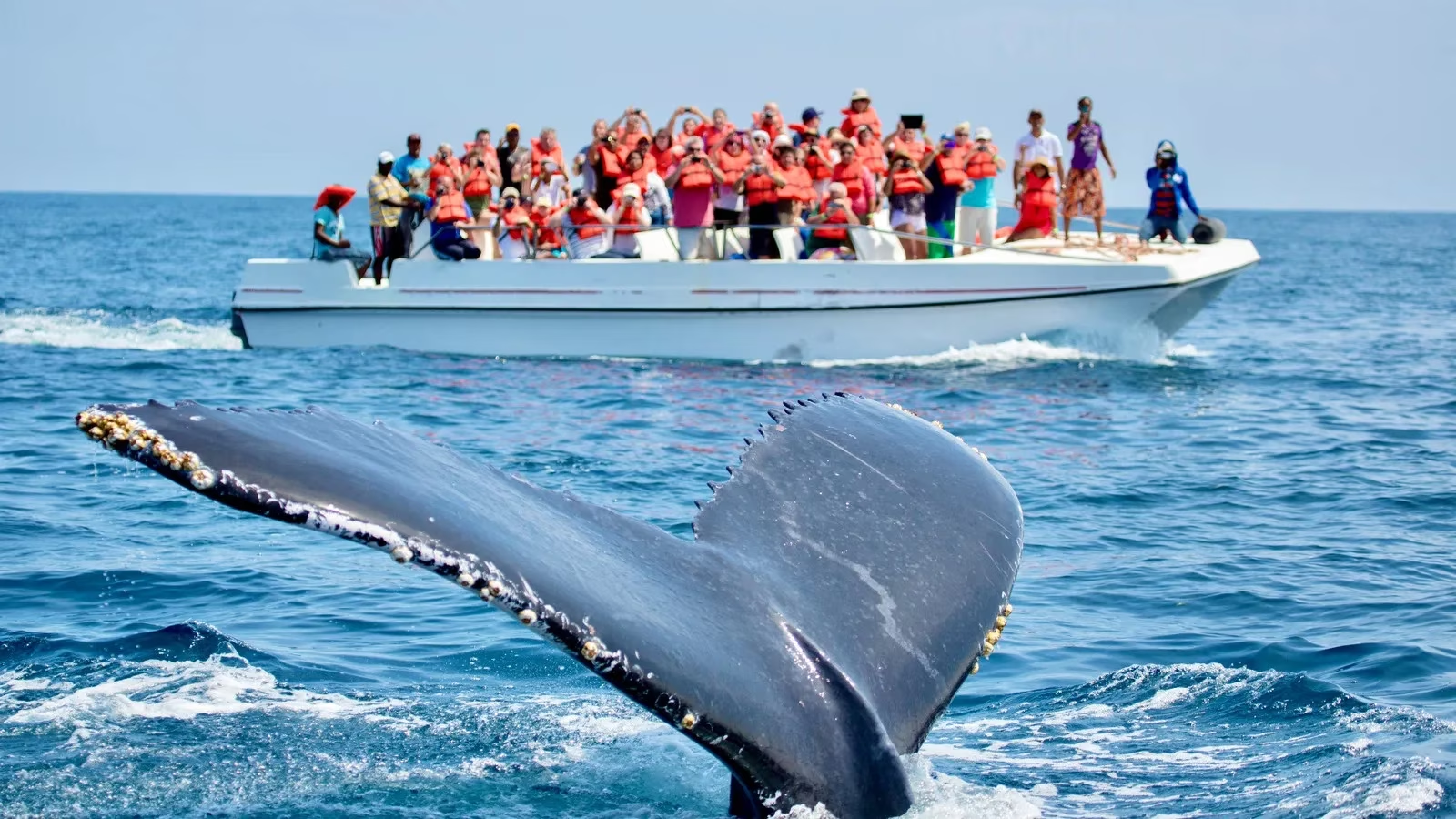
It all started when Kate Cummings and her Blue Ocean Whale Watch passengers spotted something heartbreaking near Monterey: a humpback dragging a nightmare web of fishing gear. Kate later told me, "Every single passenger kept asking for updates – they needed to know this whale would be okay." That sighting kicked off a mission involving the Marine Mammal Center, Marine Life Studies, and Cascadia Research Collective. These folks train specifically for whale rescues through the Large Whale Entanglement Response Network, and boy, did their skills get tested!
What’s wild is that this wasn’t some anonymous whale. Researchers had tracked "Check" for over a decade! His regular routes between the West Coast and Central America made identification easier, like recognizing an old friend in trouble. That familiarity? Total game-changer when planning the rescue.
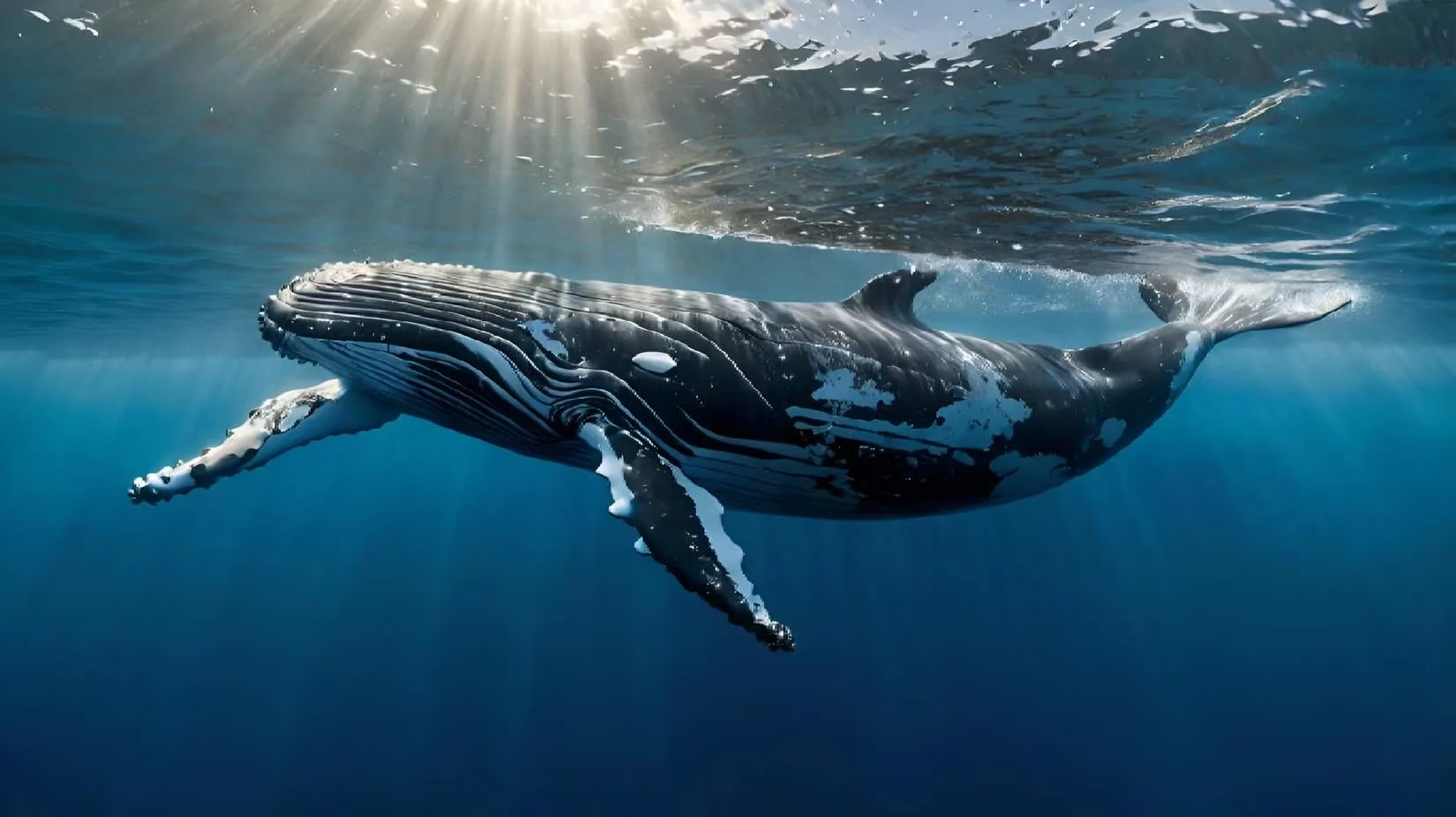
The team used giant buoys to slow Check down – imagine trying to gently halt a school bus-sized creature! But tracking him felt like chasing a marathon runner. Peggy Stap from Marine Life Studies described the tension: "One minute the tracker shows him 30 miles offshore, next he’s vanished into the deep." For six months, they played this agonizing game of tag, waiting for Check to come close enough to shore near Pacific Grove. Safety was non-negotiable too; at one point, five other whales swam dangerously close to Check, forcing rescuers to pause.
When the moment finally came? Pure magic. Rescuers sliced through 400 feet of rope while boat engines idled. Peggy still gets emotional recalling it: "When you make that final cut, suddenly you’re not moving with the whale anymore... you feel that shift instantly." Doug Sandilands saw Check bolt away with another whale moments later, noting, "That energetic swim? Best sign he’ll recover."
Dr. Julia O’Hern from the Marine Mammal Center gave huge credit to Monterey’s community: "People tracked Check for months – without those eyes, we’d never have reached him." Her words hit hard when she revealed rescues usually happen within days, but Check’s case took half a year due to his elusive movements.
People Also Ask
❓ How common are whale entanglements?
Sadly, hundreds occur yearly. Crab trap lines like Check’s are frequent culprits, turning oceans into obstacle courses.
❓ Why leave trackers on rescued whales?
Data helps scientists understand migration patterns and long-term recovery – plus, it prepares teams for future rescues!
❓ Can whales fully recover after severe entanglement?
Many do! Check’s instant swimming partner suggests social bonds aid healing, though scars sometimes remain.
❓ What happens to removed fishing gear?
Teams document every rope for research on entanglement hotspots, pushing for smarter fishing designs.

This whole saga left me buzzing with hope. Six months of uncertainty, crossed fingers, and coordinated effort... all culminating in one breathtaking cut. Check’s story proves humans and giants of the deep can rewrite a tragic script together. So here’s my question for you: What small actions could we all take to make our oceans safer for creatures like Check?