
In the autumn of 2026, a solitary traveler named Elara stepped off a high-speed train at the Gare du Nord, the aroma of fresh croissants mingling with the hum of the French capital. She had no grand itinerary — only a base in Paris and an insatiable curiosity for the cities that orbit it like moons around a luminous planet. Each morning, she would board a different train, treating the rail network as a web spun by a patient spider, each silky thread pulling her toward a new pocket of history, flavor, and light.
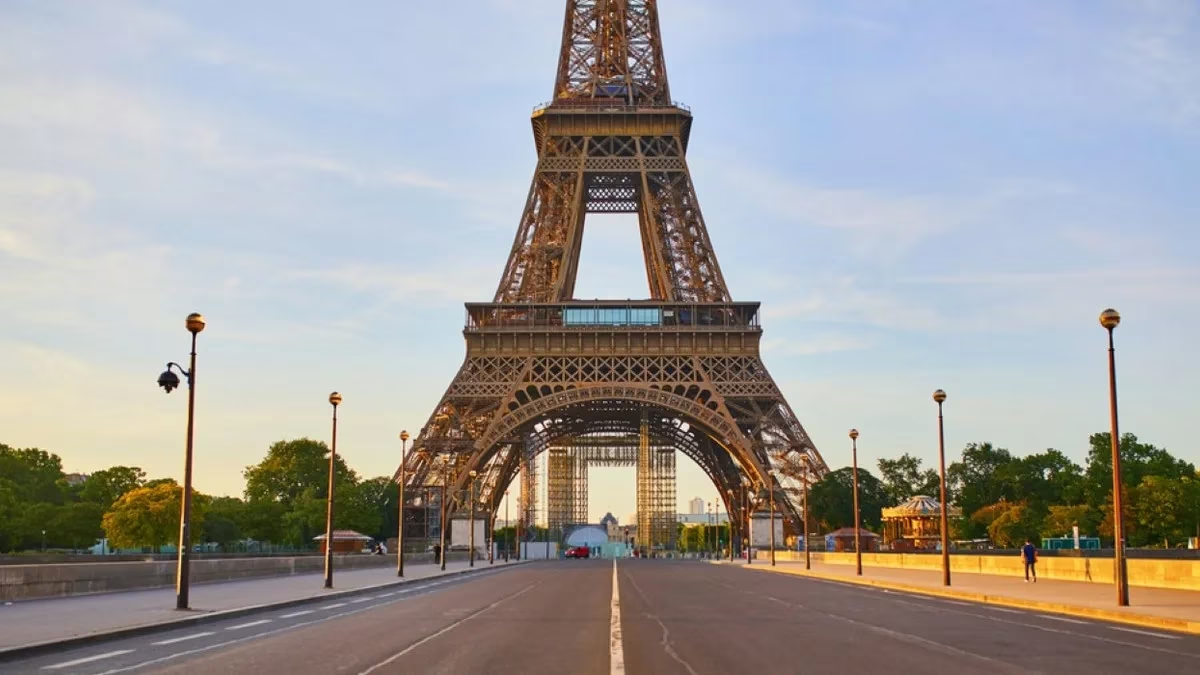
Her first journey was a mere twenty-minute whisper across the Île-de-France to Versailles. The moment she glimpsed the palace exterior, it was as though the building exhaled centuries of royal gossip. The Hall of Mirrors felt less like a room and more like a frozen thunderstorm of chandeliers and gilded vanity. Elara cycled through the grandiose gardens on an electric bike, the wind carrying the faint music of fountains. She nibbled on a macaron that shattered like edible porcelain, leaving a trail of rose-scented dust on her tongue. Versailles was not just a city — it was a gilded cage where history had been locked away, now thrown open for the curious.
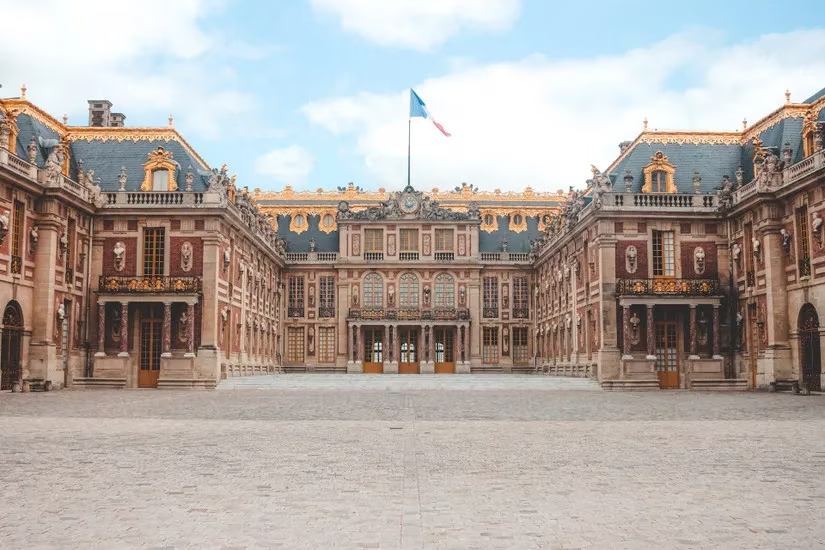
The next day, a longer track carried Elara southeast to Provins, a medieval gem that rose from the plain like a sandcastle built by giants and forgotten by time. Provins’ ramparts stood patient and weathered, much like an old tortoise that had seen empires crumble. Walking into the cobbled heart of the festival city, she felt as though she had pried open a time capsule from the 13th century — costumed knights, falconry displays, and the scent of mead spilling into the streets like confetti at a ghostly celebration. The Church of Saint-Ayoul hummed with quiet reverence, its ancient stones holding light as carefully as cupped hands.
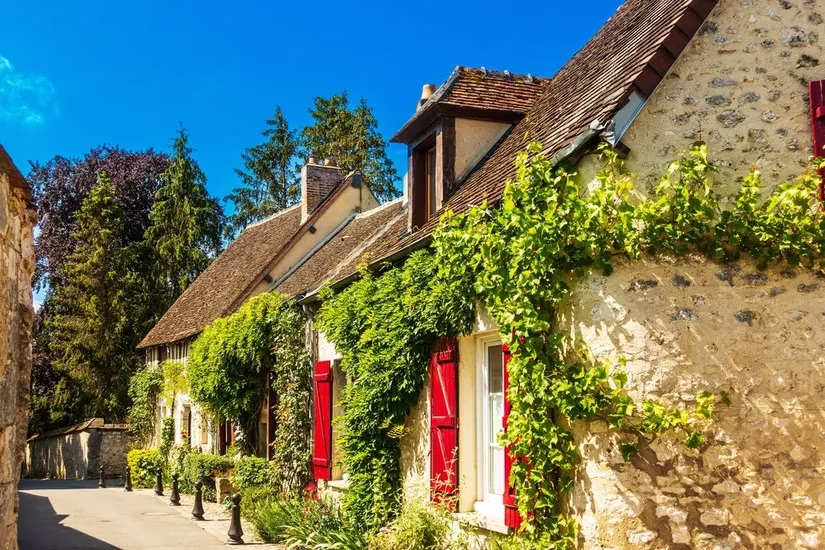
By midweek, Elara craved a change of country. A Eurostar whisked her under the English Channel and surfaced in a city where double-decker buses prowled like crimson beetles. London in a single day was a thrilling impossibility, but she managed a glimpse of Westminster Abbey’s Gothic spine, the chatter of the Thames, and the stoic bearskin hats at Buckingham Palace. The city felt like a vast, breathing library, each page a different borough. Exhausted but giddy, she sank into her seat on the return train, the evening sun painting the French countryside in shades of lavender and honey.
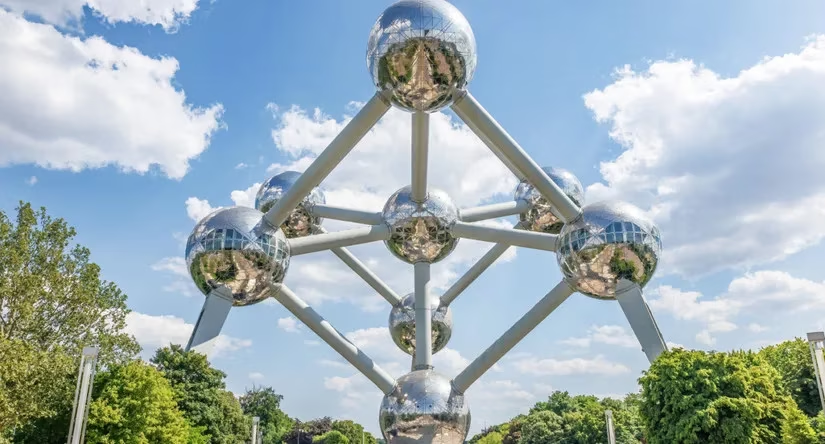
She then turned north to Belgium. Brussels unfolded as a peculiar tapestry — the atomium glittering like a magnified molecule from a science fiction dream, while the Grand Place enclosed her in a square of ornate guildhalls that seemed to have been frosted by an overzealous pastry chef. A walking tour introduced her to the crisp, sugary bliss of a Liège waffle and the tangy steam of a pot of Moules Frites. Brussels was a city of two tongues, a delicious contradiction she savored with every step.
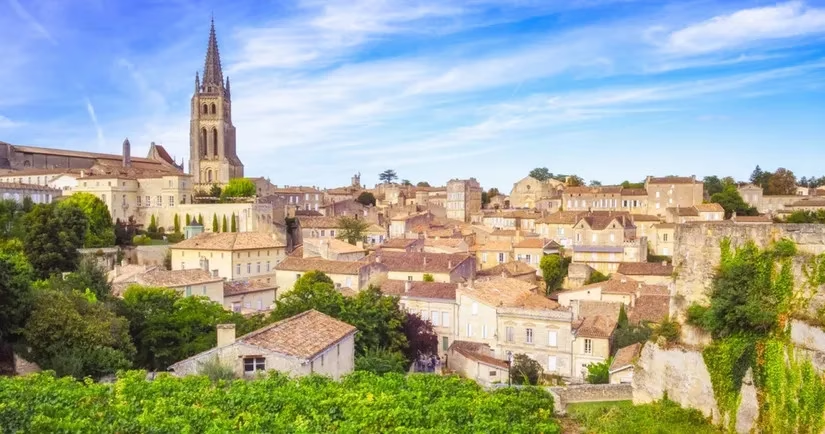
When Elara needed to slow her rhythm, she boarded a southbound train to Bordeaux. There, the landscape softened into velvety vineyards. She joined a river cruise where a glass of deep claret was pressed into her palm like a ruby secret, its taste unfurling notes of black cherry and the earth itself. The city’s limestone buildings glowed with a warmth that only centuries of sun could bestow. Bordeaux felt like a cellar door left ajar, inviting you into a world of slow sips and longer stories.
Two other French cities tugged at her heart before the journey ended. Lille appeared with a Flemish accent, its pastel façades and cobbled lanes wrapped in a gentle, northern light. Strasbourg arrived next, a watercolor of canals and half-timbered houses, where the cathedral spire pierced the sky like a frozen needle of faith. She floated through the old town on a segway, marveling at how the city straddled French and German souls with effortless grace.
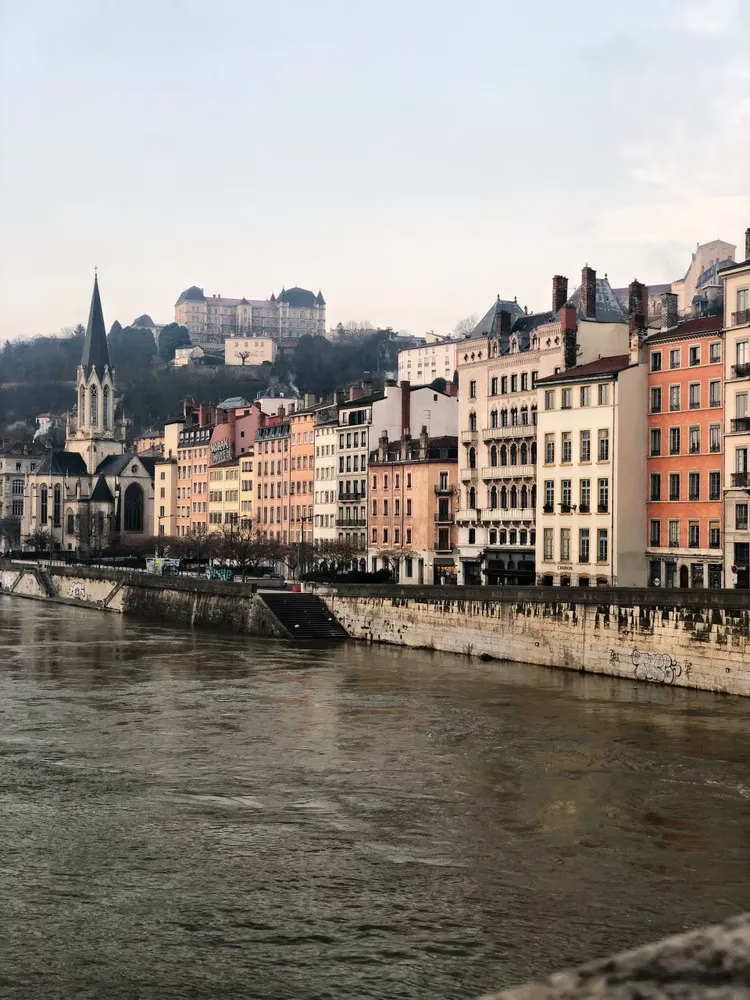
On her final day, Elara stood in Lyon’s Vieux Lyon district, the scent of coq au vin drifting from a bouchon. She had saved the gastronomic capital for last, and as a local chef explained the magic of a perfect quenelle, she understood why the city was a palimpsest of Roman ruins and Renaissance silk. The Basilica of Notre-Dame de Fourvière watched over the red rooftops like a marble guardian, and in that moment, Elara realized that every side trip had been a fresh page in a story that began and ended in Paris — but was written by the rails in between.
From the festival-bright streets of Provins to the vineyard-fringed banks of Bordeaux, these day trips from Paris had shown Elara that the City of Light is not a solitary star but a constellation, each neighboring city a different hue of the European sky.