
Driving into New York City in 2026 is like volunteering to play pinball with a wallet that has a mind of its own. Every bumper charges by the hour, every tunnel spits out a toll, and the elusive parking spot gleams like a mirage made of asphalt and false hope. For third-person travelers who insist on bringing a car to the Big Apple, parking is not a minor logistical detail; it is the main event, the boss battle, the reason some people simply move to New Jersey and take the train. The good news? With a little planning and a sense of humor, a driver can park in NYC without selling a kidney. The bad news? The kidney might still be on standby.
🅿️ Street Parking: The Art of Patience and Exact Change
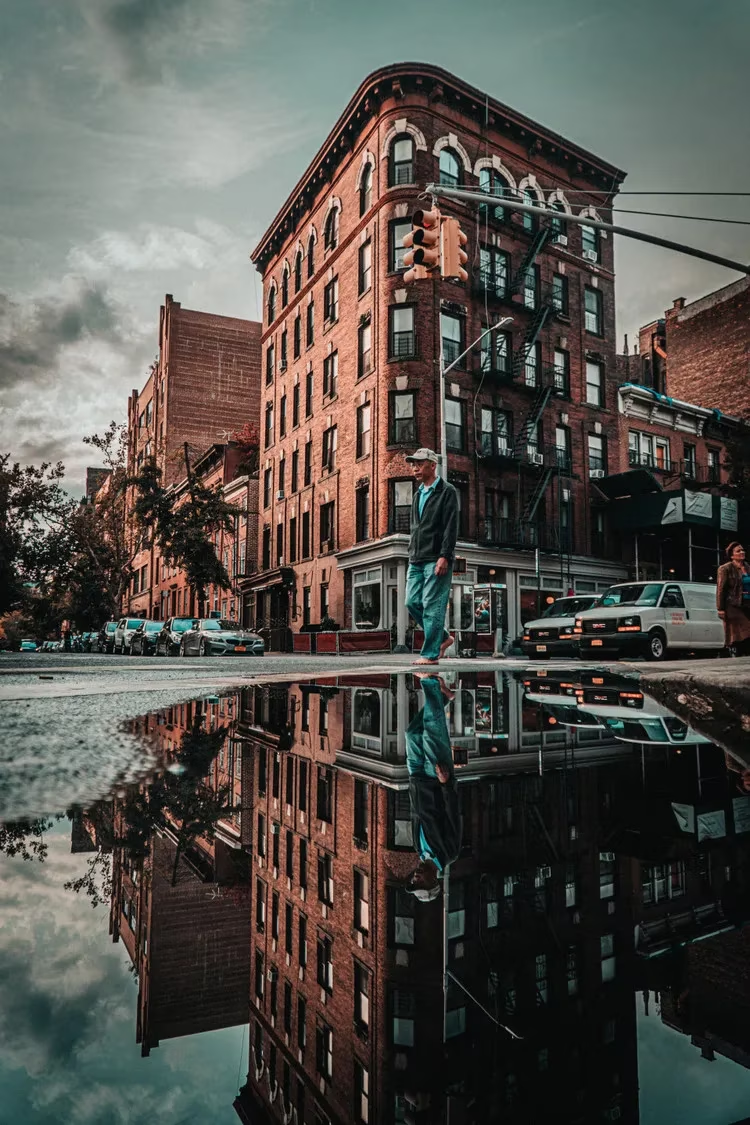
New York City boasts more than 13,000 metered parking areas, with Manhattan hogging the most spaces. That sounds generous until one remembers that Manhattan also contains approximately nine million people, a million delivery trucks, and one guy who double-parks just to buy a bagel. Street parking costs historically ranged from $1.25 to $7.50, while commercial vehicles paid $5 to $8. By 2026, those numbers have mostly drifted upward in popular zones, so a budget-minded visitor should expect to pay somewhere between $2 and $10 per hour, depending on location and duration. Parking duration can stretch from one to 15 hours, depending on vehicle type and meter rules.
Payment options include coins, credit cards, the ParkNYC app, and the NYC Parking Card. Coins, in 2026, remain a charming relic, like a fax machine that still works. The ParkNYC app is the modern route, assuming the driver remembers their password and the app does not decide to update itself at the worst possible moment.
The factors influencing street parking costs are simple: location, parking duration, time of day, and day of the week. A spot near a tourist magnet costs more than a spot near a mysterious loading dock in Queens. Vacationers must also read the parking signs. This is crucial. NYC parking regulations are a Rubik's Cube designed by a caffeinated bureaucracy—just when a driver thinks they have solved it, a sign changes color, a street sweeper appears, and a ticket materializes like a bad magic trick. Patience is not optional. Sometimes a driver must wait for a spot, circle the block, and question every life choice that led them to drive into Midtown.
🏢 Garage Parking: The Concrete Purgatory with Benefits
New York City has plenty of parking garages, and they operate under wildly different rules. Some are open 24 hours, others are not. Some lurk underground, while others feature rooftop decks with views that almost justify the price. The cost varies by company and location. Popular companies include Central Parking System, which operates in Rockefeller Center, Times Square, and Herald Square; Icon Parking, found in Greenwich Village, Union Square, and SoHo; Edison ParkFast, serving the Upper West Side, Upper East Side, and Midtown East; and Quik Park, with spots in the Theater District and Hell's Kitchen.
Garage parking historically cost between $24 and $28, but that was before inflation developed a personal vendetta against travelers. In 2026, a realistic budget for a garage is often $30 to $60 or more, especially for oversize vehicles. Minivans, crossovers, and other large rides may trigger extra fees, because nothing says hospitality like charging more for a sliding door. Travelers should ask about the return time. Parking tickets in garages have a return time, and if a driver comes back late, the attendant may charge extra. The savvy move is to extend the duration upfront. It stings less than a surprise fee. Tipping the valet when picking up the car is also wise, assuming the car has not been relocated to a dimension of lost keys.
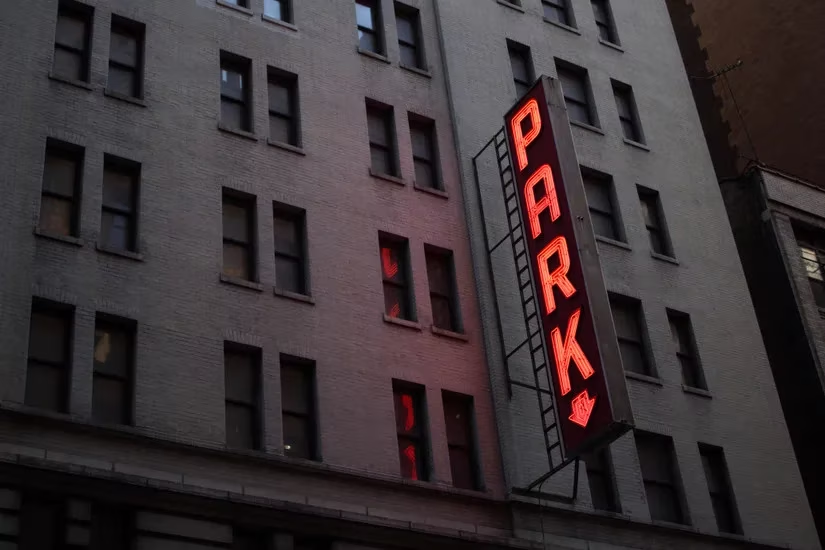
A garage attendant in NYC is a cross between a concierge and a tollbooth philosopher. They hold the keys to a driver's wallet and sanity, so being polite can pay off. Garages are generally safer than street parking, and they can save money compared with circling for an hour and then paying a meter anyway. That said, not all garages are equal. Some are pristine palaces of concrete; others feel like a parking spot inside a haunted elevator shaft. Reading reviews and booking ahead helps.
🌙 Overnight, Weekend, and Monthly Parking
If planning to park a car overnight, the streets are not the place. New York is a big city, which means anything can happen, and a car left on the street overnight might wake up with a ticket, a boot, or a new career as a shelter for urban raccoons. Many garages offer overnight parking deals. The average cost of overnight parking in NYC has historically been between $40 and $60, though 2026 prices can climb higher in Manhattan. Weekend parking averages between $20 and $37, with one catch: travelers may only be able to exit and enter the car once the weekend is over. That is fine for a couple on a romantic getaway, less fine for someone who forgot their phone charger in the trunk.
Monthly parking is a strong option for vacationers staying in the city for an extended period. The average monthly cost is around $500, which breaks down to roughly $19 per day. That is dramatically cheaper than daily or hourly rates. Several places in NYC offer monthly parking, and it can save a fortune for long stays. Drivers should also reduce the number of times they take the car in and out of the lot or garage. Some companies charge an extra fee for frequent exits, so treating the garage like a home base rather than a revolving door saves money.
💡 Budget Tips for 2026
| Strategy | Why It Helps |
|---|---|
| Book monthly parking | Around $500 per month, or about $19 per day, beats hourly rates. |
| Limit in-and-out trips | Avoids extra fees some garages charge. |
| Use parking apps and websites | Helps locate spaces and reserve discounted spots. |
| Read every sign twice | Prevents tickets that cost more than a Broadway ticket. |
| Extend garage time upfront | Cheaper than paying a late return fee. |
| Keep cash for tips | Valets remember generous drivers, sometimes. |
Online apps and websites are essential in 2026. They help locate available parking spaces throughout the city and allow drivers to reserve a spot at a discounted rate. Technology will not make NYC parking pleasant, but it can make it less like a scavenger hunt written by a sadist. Travelers should also consider parking outside Manhattan and using public transit. Sometimes the smartest parking spot is the one near a subway station in Queens or Brooklyn.
Parking in NYC can be challenging, but planning well makes a huge difference. Know the potential costs. Budget for street parking, garage parking, overnight fees, and the occasional ticket that arrives like an uninvited relative. Use apps, be patient, follow the rules, and never assume a spot is free just because it is empty. In New York City, an empty parking space is either a trap, a mirage, or a movie set. With a little humor and a lot of preparation, a driver can survive the concrete jungle and maybe even enjoy the ride.