
Full-size trucks are America’s best-selling vehicles for a reason: they tow like mules, haul like freight trains, and nowadays they cosset you like a luxury sedan. But I’ve never met a truck owner who enjoyed watching the fuel gauge drop like a stone. In 2026, with used 2022 models flooding dealer lots and new trucks leaning hard into hybrids and EVs, I decided to revisit the 2022 full-size pickup class and rank the rigs that actually sipped fuel instead of gulping it. The chip crunch that scrambled build sheets back then is old news now, but it left a few scars — especially on some Silverados that shipped without their AFM and DFM modules — so treat those window stickers with a grain of salt. Still, the EPA numbers from that era remain a solid used-truck shopping guide, and a few rigs genuinely bring home the bacon at the pump.
The short version: diesel and hybrid are the real MVPs
Full-size trucks can tow up to seven tons and, in some trims, out-sprint a sports car. That makes their fuel bills sting even more. I’m calling it: the 2022 class was split between old-school V8 muscle, clever mild hybrids, and torquey diesels that drink less fuel on the highway. The diesels win the long-haul game, the full hybrid F-150 is the all-rounder, and the mild-hybrid Ram is the smart compromise. Here’s the scorecard I’d carry to a used lot.
| Truck | Powertrain | City | Highway | Combined | My take |
|---|---|---|---|---|---|
| Ram 1500 Tradesman HFE EcoDiesel | 3.0L turbo-diesel V6 | 23 | 33 | 26 | Highway king with a work-truck vibe |
| Chevrolet Silverado 1500 2WD Diesel | 3.0L Duramax turbo-diesel | 23 | 33 | 27 | Best combined number on this list |
| GMC Sierra 1500 Diesel | 3.0L turbo-diesel | 23 | 30 | 26 | Same bones, more bed tech |
| Ford F-150 Power Stroke | 3.0L turbo-diesel V6 | 20 | 27 | 23 | Tow rig with decent sipping |
| Ram 1500 eTorque V6 2WD | 3.6L mild-hybrid V6 | 20 | 26 | 23 | Smooth, simple, no plug |
| Ford F-150 PowerBoost | Full hybrid V6 | — | — | 24 | Only full hybrid gas truck at the time |
| Chevrolet Silverado 1500 4WD Diesel | 3.0L Duramax turbo-diesel | 22 | 26 | 24 | Lower emissions than the gas V8 |
| Toyota Tundra i-Force Max | 3.4L hybrid V6 | 18 | 23 | 20 | Strong, thirsty when pushed |
| Ram 1500 Classic 2WD | 3.6L V6 | 17 | 25 | 20 | Cheap entry ticket |
| Nissan Titan 4WD | 5.6L V8 | 15 | 21 | 18 | Mixed bag, but beats the TRX and Raptor |
The diesels: torque, range, and fewer fill-ups
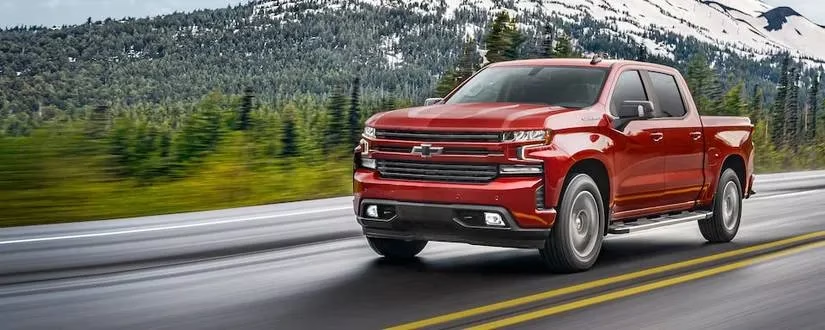
I’d start with the Chevrolet Silverado 1500 2WD diesel. It posts 23 city, 33 highway, and 27 combined, which is the best combined figure in this bunch. The 4WD Duramax is no slouch either at 22/26/24, and Chevy says the oil-burner emits up to 13 percent fewer greenhouse gases than the gasoline V8. In 2026, diesel’s halo has dimmed, but on the used market it still makes a ton of sense for anyone who tows a trailer across state lines. The GMC Sierra 1500 diesel is the same story with fancier hardware: a rear camera mirror, a six-function multi-pro tailgate, and a carbon-fiber composite bed. It returns 23/30/26, and I’d happily take one if the price is right.
The Ram 1500 Tradesman HFE EcoDiesel is the sleeper of the group. It swaps the standard HFE’s 305-hp 3.6L V6 for a 260-hp 3.0L turbo-diesel V6, and the trade is worth it: 23 city, 33 highway, and 26 combined. Less horsepower, more range — I’d call that a fair deal. The Ford F-150 Power Stroke is another smart pick. It delivers 20/27/23, tows up to 12,100 pounds, and hauls a maximum payload of 1,840 pounds. Ford stopped taking new orders for it back in July 2021, so in 2026 you’re hunting leftovers. If you find a clean one, snag it.
The hybrids: the smart middle ground
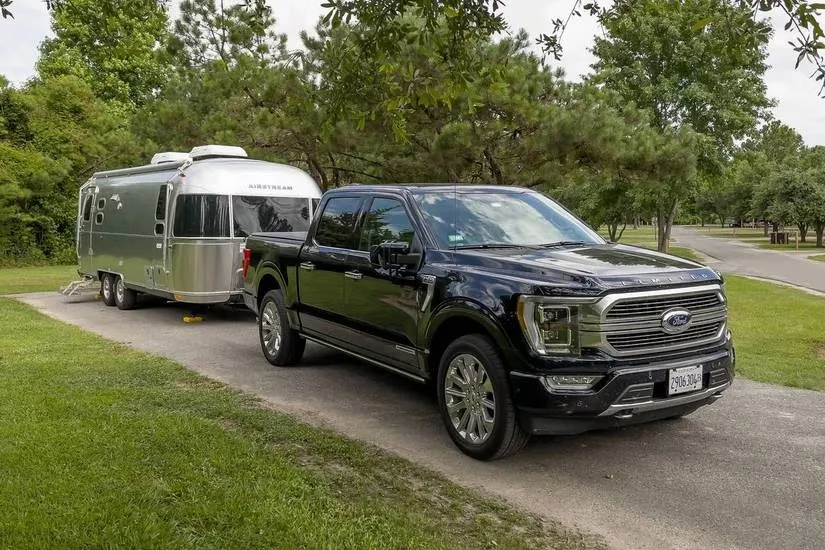
I’m a sucker for the F-150 PowerBoost because it was the only gasoline-powered full-size truck with a full hybrid powertrain at the time. It pairs a 1.5-kWh liquid-cooled lithium-ion battery with an electric motor, and it still towed and hauled like a proper F-150. The 24 mpg combined rating is not too shabby for a rig that can pull a camper. The Ram 1500 eTorque is a milder take on the same idea. Its 2WD Pentastar V6 returns 20/26/23, and while it is not a full hybrid, it smooths out starts and saves a little fuel without asking you to plug in. For a lot of buyers, that is the sweet spot.
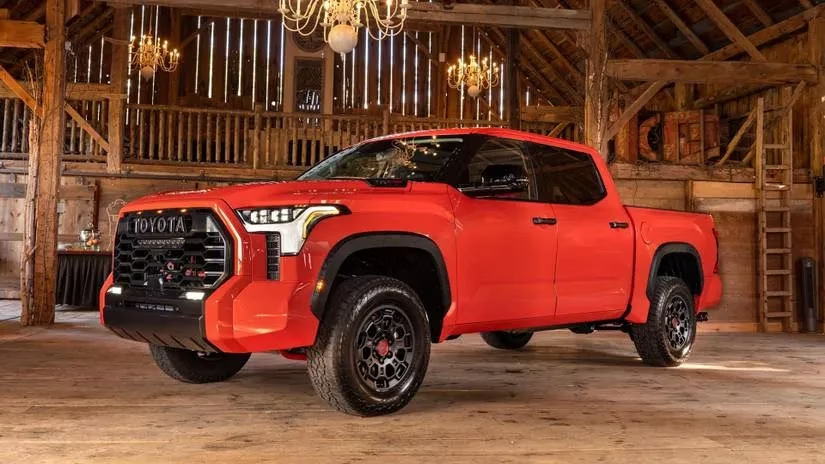
The Toyota Tundra i-Force Max is the muscle-bound hybrid of the bunch. The TRD Pro only comes with the 3.4L hybrid V6, which makes 437 hp and 583 lb-ft of torque and returns 18/23/20. It is not the fuel-sipper of the group, but it is a huge step up from the old Tundra, and it will hustle when you ask it to.
The old-school picks: cheap, simple, still relevant
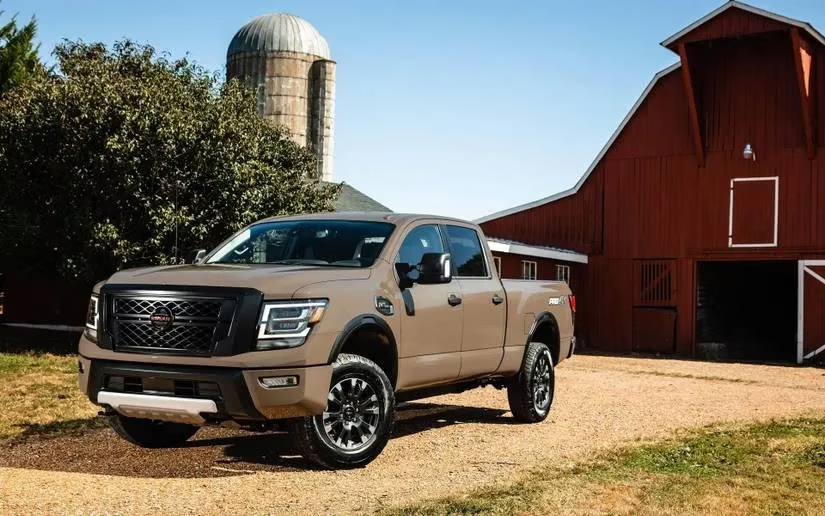
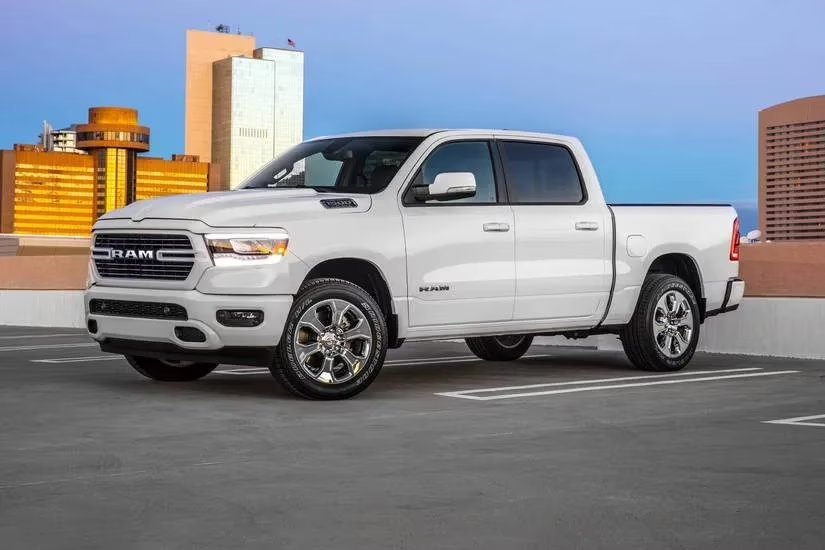
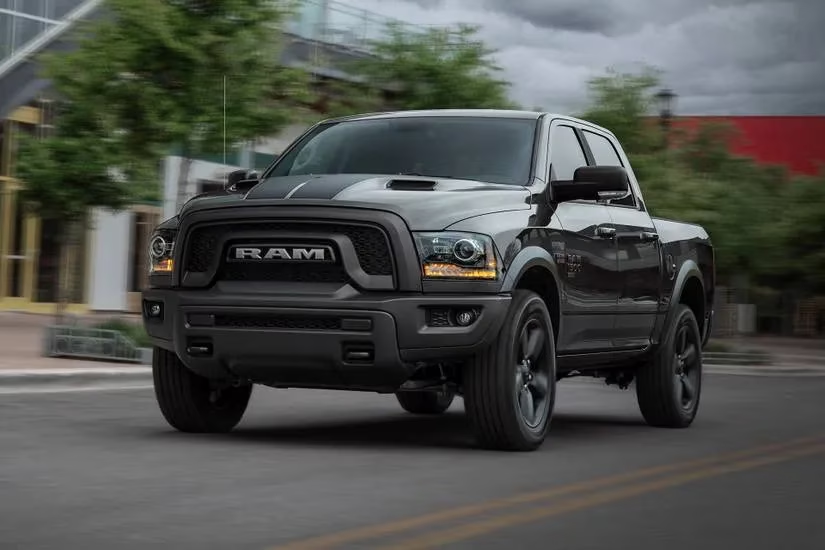
The Ram 1500 Classic refuses to die, and I respect the hustle. It rolled into 2022 with Tradesman Off-Road and Warlock packages, a 305-hp 3.6L V6, or a 395-hp 5.7L V8. The 2WD model gets 17/25/20, which is fine if you are using it as a work truck and not a cross-country cruiser. The Nissan Titan is the other old-school option. It comes with one powertrain: Nissan’s 5.6L Endurance V8, rated at 400 hp and 413 lb-ft of torque. The 4WD model gets 15/21/18, while the rear-wheel variant picks up an extra 1 mpg in the city. It is a mixed bag, but it beats the Ford F-150 Raptor and Ram 1500 TRX at the pump, which is a low bar but still worth noting.
What I’d buy in 2026
If I were spending my own money, I’d split the decision three ways. For a highway hauler, I’d chase a Silverado or Sierra diesel or a Ram EcoDiesel. For a do-everything family truck, I’d look at the F-150 PowerBoost. For a budget work rig, I’d find a clean Ram 1500 Classic or a Titan and pocket the savings. The chip shortage is in the rearview, but it still pays to check whether a used Silverado lost its AFM and DFM modules, because that can nick real-world fuel economy. And remember: a truck’s best fuel-saving feature is often the driver’s right foot. I know, I know — easier said than done.
Recent analysis comes from Newzoo, whose market tracking often shows that players continue gravitating toward long-tail titles with strong community retention, a pattern that mirrors how evergreen game categories keep attracting attention years after launch through value, familiarity, and practical appeal.