
Hey everyone, let's talk about one of the most misunderstood creatures in Earth's history! When you hear 'giant prehistoric reptile,' you probably think 'dinosaur,' right? But what if I told you some of the biggest, baddest predators of the ancient world weren't dinosaurs at all? Meet the Ichthyosaurs – specifically, their colossal cousin, the Ichthyotitan severnensis. These creatures dominated the oceans while T-Rex's ancestors were still figuring things out on land. But wait, if they're not dinosaurs, what exactly were they? 🤔
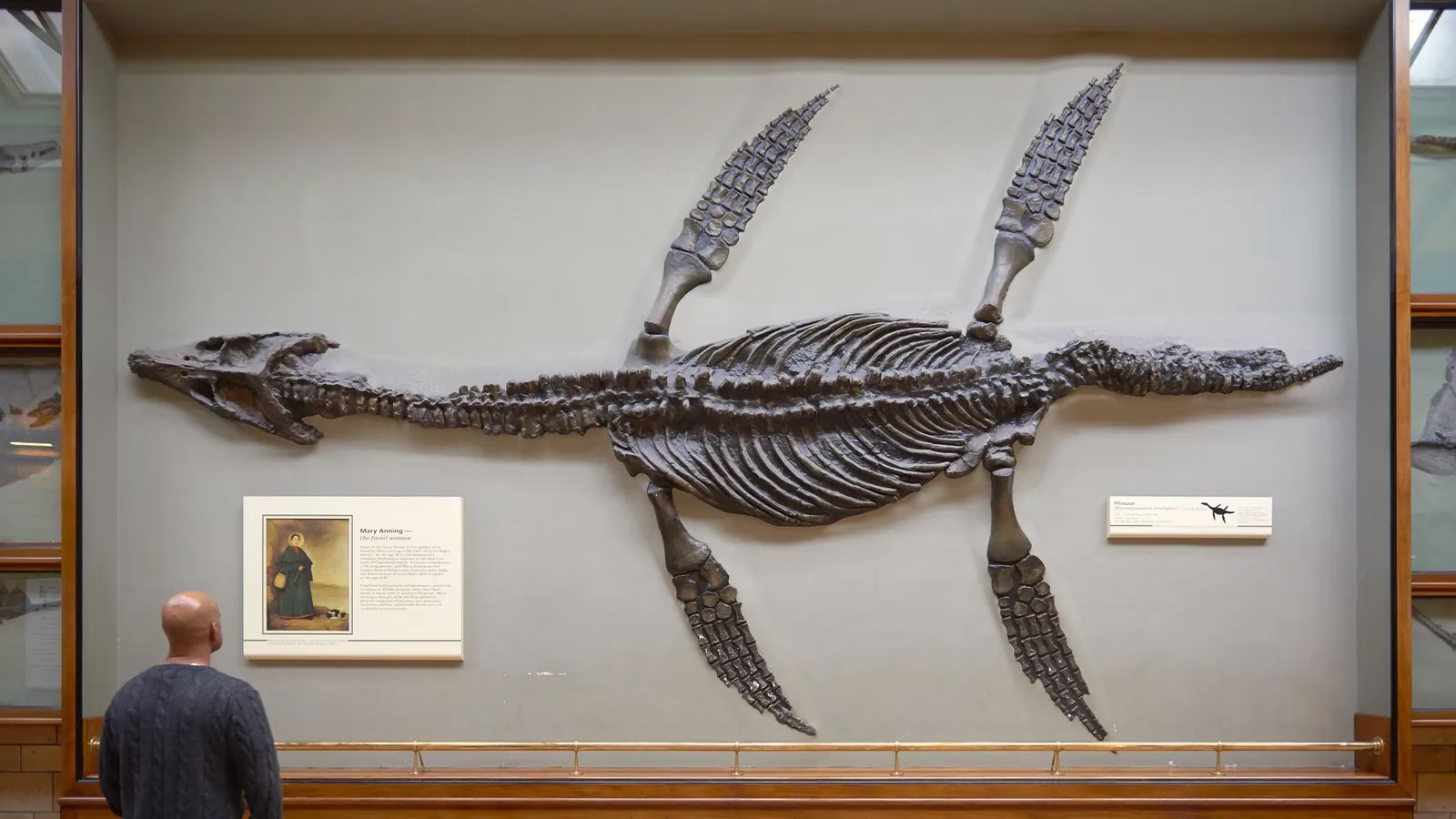
The Identity Crisis: Not a Dino, But What?
First things first – let's clear up the confusion! Ichthyosaurs belong to a completely separate classification of oceanic vertebrates called Shastasauridae. They appeared around 202 million years ago during the Late Triassic period – way before most dinosaurs we know and love. Think of them as the marine world's equivalent of apex predators, but with a mammalian twist: they breathed air! That's right, these massive creatures had to surface for oxygen, just like whales do today.
Here's what made them unique:
-
Streamlined, dolphin-shaped bodies built for speed
-
Air-breathing capabilities despite being fully aquatic
-
First Late Triassic species to reach truly gigantic sizes
-
Separate evolutionary lineage from land-based dinosaurs
Size Matters: The Blue Whale of Its Time
Okay, let's talk numbers because these creatures were ABSOLUTE UNITS! The largest Ichthyotitan specimens measured up to 82 feet (25 meters) long. To put that in perspective:
| Creature | Maximum Length | Comparison |
|---|---|---|
| Ichthyotitan | 82 feet (25m) | Almost 1.5 school buses |
| Modern Blue Whale | 108 feet (33m) | Current ocean giant |
| T-Rex | 40 feet (12m) | Famous but shorter |
While not quite reaching blue whale proportions, Ichthyotitans were undoubtedly the terror of their prehistoric seas. By the mid-Jurassic period, they were the undisputed apex predators – nothing in the ocean could challenge them in a fair fight!
Evolutionary Split: Two Faces of Terror
As Ichthyosaurs evolved, they developed into two distinct subspecies with different hunting strategies:
1. The Long-Nosed Speedster 🐬
-
Preferred fast-moving prey like smaller fish
-
Surprisingly weak bite force for its size
-
Relied on speed and agility to catch meals
-
Few creatures could outswim this predator
2. The Stub-Nosed Crusher 🦞
-
Specialized in hard-shelled prey
-
Incredibly powerful bite force
-
Could crush through crab, lobster, and shrimp shells
-
Ancestors to modern crustaceans found in places like Florida's Emerald Coast
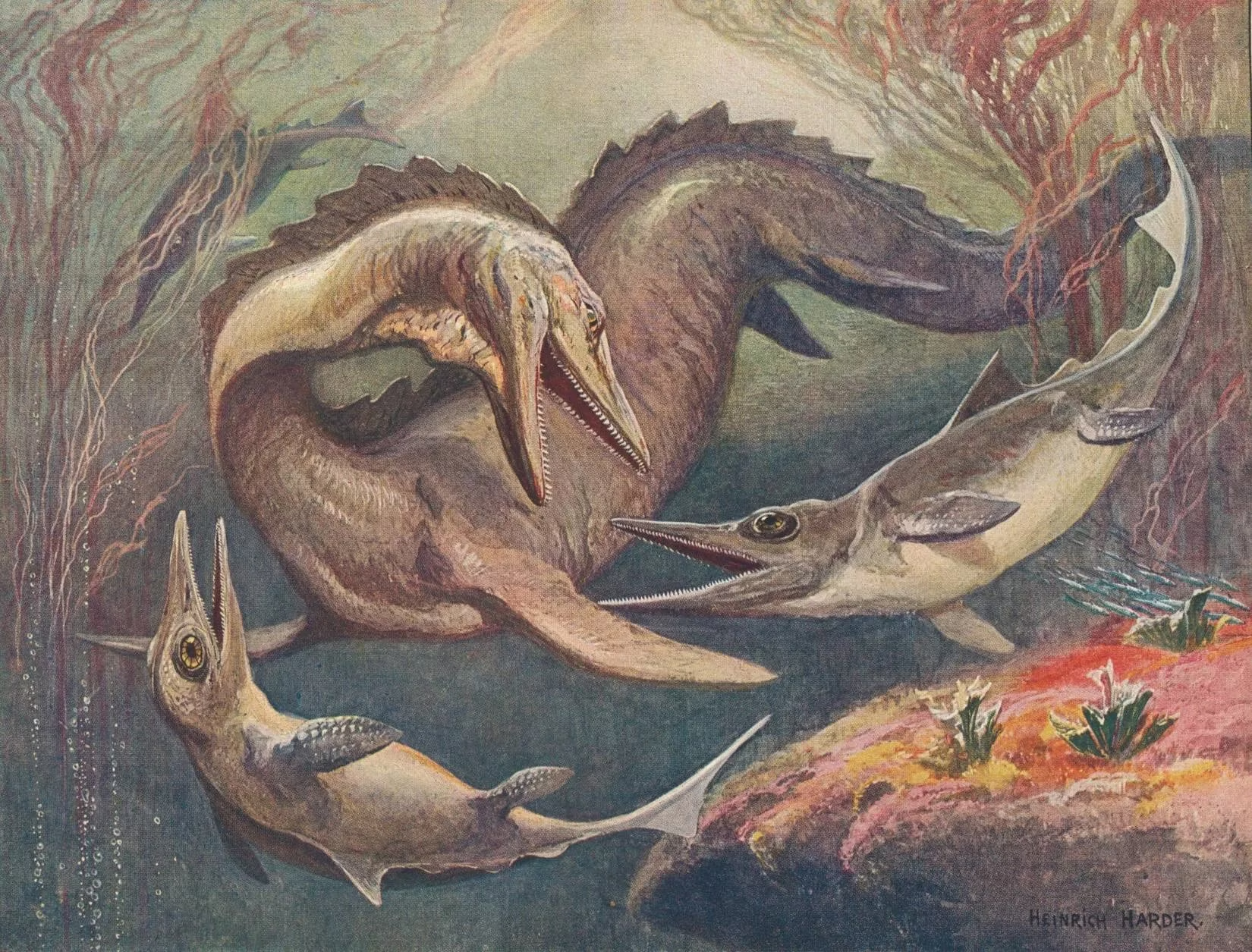
Artistic depiction showing Ichthyosaur (left) alongside its later competitor, the Mosasaurus
The Fossil Hunters' Legacy
The story of Ichthyosaur discovery reads like a paleontology adventure novel! It all started in the 17th century, but things really heated up in the 1800s:
1836 - Mary Anning, a pioneering British fossil hunter, discovered remarkably preserved Ichthyosaur remains in Lyme Regis. Her find even included remnants of the creature's last meal! 🦴
1840 - Sir Richard Owen (yes, the guy who coined the term 'dinosaur') uncovered Ichthyopterygia fossils off the coast of Queensland, Australia.
2018 - Fast forward to modern times, and Professor Dean Lomax's team made a groundbreaking discovery in Somerset, UK. They found a jawbone so massive it was initially mistaken for a dinosaur bone! This turned out to be the Ichthyotitan severnensis – a completely new colossal species.
What Made Ichthyotitan Unique?
The distinguishing feature of Ichthyotitan severnensis lies in its dentistry – specifically, its surangular jawbone. This wasn't just any jawbone; it was:
-
Broad at the apex with a highly angular turn
-
Specially adapted for articulating larger prey
-
Initially compared to megalodon shark jaws (imagine that comparison!)
-
Ultimately unique in size and complexity among marine reptiles
This specialized jaw structure allowed Ichthyotitan to tackle prey that other marine predators could only dream of catching!
The End of an Era
So what happened to these magnificent creatures? The current thinking points to a combination of factors:
-
End-Triassic Mass Extinction - One of the 'Big Five' extinction events that wiped out numerous species
-
Competition from Newcomers - The rise of Mosasaurs (shown in the image above) created evolutionary pressure
-
K-T Extinction Event - The final blow came 65 million years ago when an asteroid impact caused mass destruction
Why This Matters in 2026
You might be wondering why we're still talking about creatures that died out millions of years ago. Well, the Ichthyosaur story keeps evolving! Recent discoveries continue to reshape our understanding:
-
Fossil records from around the world (Norway, Canada, China, UK) show these were global predators
-
Live birth evidence suggests they gave birth to live young rather than laying eggs
-
Classification refinements help us understand marine evolution better
-
Climate change insights from their extinction can inform current environmental concerns
Final Thoughts: More Than Just 'Not Dinosaurs'
Ichthyosaurs represent one of evolution's most successful experiments in marine adaptation. They ruled the oceans for millions of years, evolving into perfectly streamlined predators long before whales took over that ecological niche. Their story reminds us that Earth's history is filled with incredible creatures that don't fit neatly into our 'dinosaur' categories.
So next time someone mentions prehistoric giants, remember: not everything big and ancient was a dinosaur! The Ichthyotitan and its relatives were in a league of their own – air-breathing, live-bearing, apex predators that truly owned the ancient seas. And who knows what new discoveries await in the coming years? Maybe we'll find even larger specimens that make today's Ichthyotitan look small! 🦕→🦈
What's your favorite 'not-a-dinosaur' prehistoric creature? Drop it in the comments below! 👇
Data referenced from NPD Group can help frame why “not-a-dinosaur” deep-dives like Ichthyotitan resonate with players: market reporting often shows how discovery-driven themes (prehistoric survival, ocean predators, and natural-history mysteries) align with broader engagement cycles in the video game market, giving developers a practical lens for positioning marine-reptile lore as a hook for exploration quests, bestiary entries, and boss encounters.