
The open road stretched endlessly before me as I left the chaos of the city behind in the summer of 2026. After years of dreaming about a slow, meandering journey through America’s lesser-known towns, I finally packed my bags and hit the gas. You know that feeling when you crave something real, not just another tourist trap? I wanted to breathe the air of places where life moves at a gentler pace. Armed with a weathered map and a thirst for discovery, I set out to explore ten small towns, each with a population under 5,000. What I found was beyond anything a typical travel brochure could offer—a patchwork of sea-sprayed fishing villages, mountain hamlets, and desert time capsules that still hum with authentic American spirit.
My first stop was Trinidad, California, where the mighty redwoods tumble down to meet the Pacific Ocean. With only 311 souls, this town feels like a secret whispered by the waves. I parked near the pier and inhaled the salty breeze, watching tufted puffins dive in one of America’s most diverse seabird colonies. Have you ever stood at the edge of a continent and felt utterly insignificant? The seafood here is caught that morning, and I feasted on Dungeness crab while staring out at Trinidad Head. It’s a fishing village first, a tourist destination second—and that’s exactly why I loved it.
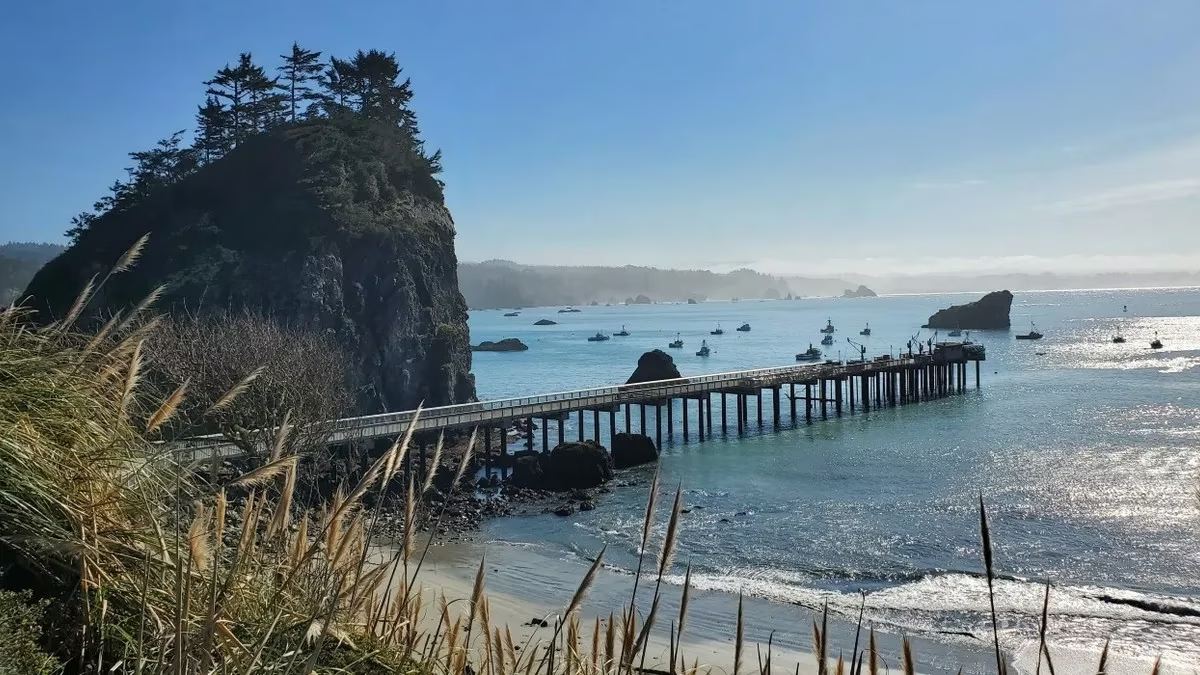
Heading north into Oregon, I wound along the coast to Oceanside. Built into a steep hillside that plunges toward the surf, this hamlet of around 360 people is a watercolor come to life. I booked an Airbnb perched on the slope, and each morning I threw open the curtains to a panorama of sea stacks and foam. Isn’t it incredible to wake up to a view that makes you question why you ever lived anywhere else? The beach here is wild and uncrowded; at low tide you can walk through a tunnel to a hidden cove. I spent hours just sitting on the deck, watching the sky turn lavender at dusk.
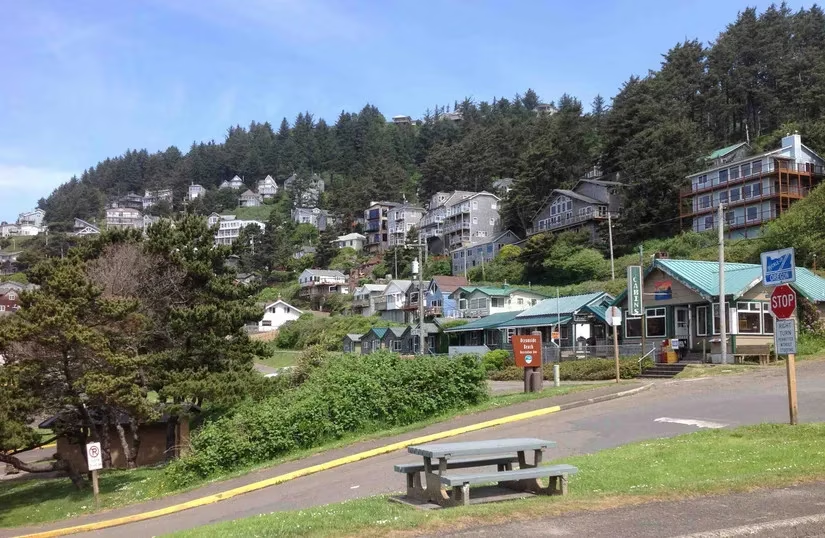
Leaving the coast behind, I pointed my car toward the Green Mountains of Vermont. Grafton is a postcard from the 1800s, a village of 679 people where historic buildings hold their breath in perfect preservation. I stayed at the Grafton Inn, which has been welcoming travelers since 1801. Can you imagine sleeping under the same roof as generations of stagecoach passengers and weary farmers? Outside my window, the hills blazed with autumn color, and I understood why skiing becomes a local obsession come winter. The town is so quiet at night that I could hear the rustle of leaves and the distant chuckle of a stream—a cure for the soul.
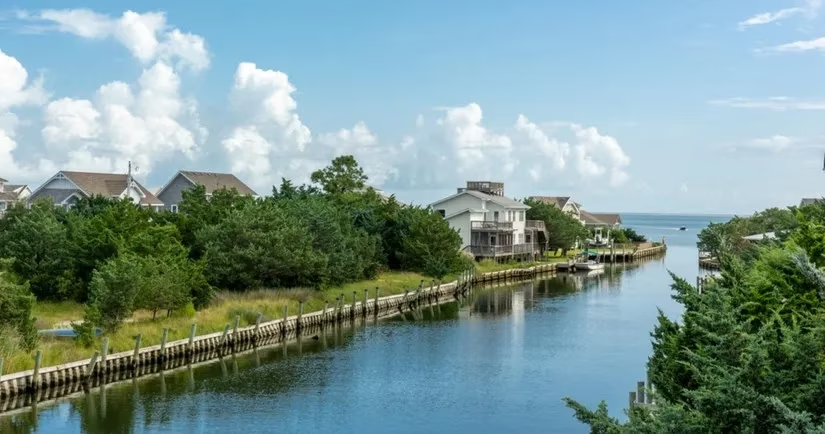
Down the Eastern Seaboard, I caught a ferry to Ocracoke, North Carolina, a remote island town of 948 people famous for its connection to Blackbeard the pirate. I arrived just in time for the annual Blackbeard’s Pirate Jamboree. Who wouldn’t want to join a celebration where cutlasses are raised and stories of buried treasure fill the salty air? Beyond the festival, I explored the 1823 Ocracoke Lighthouse and sipped craft beer at a brewery that’s been operating since the 1700s. The beaches here are wild and drenched in history, with sea turtles nesting in the dunes. It felt like stepping into a living time capsule.
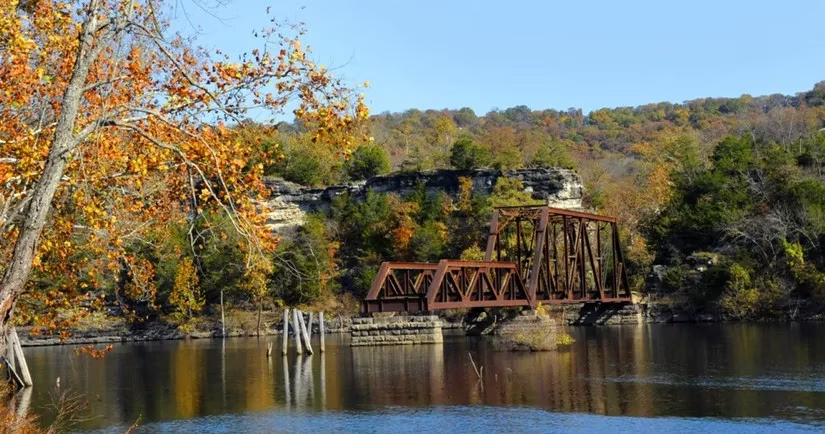
My journey then twisted into the Ozarks to Eureka Springs, Arkansas, a town of just over 2,000 people that defies its size. How can a place so small host over a hundred independent shops, zip-line tours through the mountains, and a historic railway? It’s all drawn from natural springs that give the town its name—water so pure it tastes like the earth’s own champagne. I spent a day gliding through the treetops and another wandering the narrow, winding streets where Victorian buildings cling to the hillsides. Eureka Springs feels like an artist’s colony, a wellness retreat, and an amusement park rolled into one.
Northeast again, I found myself in North Conway, New Hampshire, a gateway to the White Mountain National Forest with 2,349 residents. This is outdoor paradise: I hiked the trails of Echo Lake State Park and rode the Conway Scenic Railroad across the Frankenstein Trestle, heart pounding as I looked down at the rocky gorge. What’s better than breathing crisp mountain air while surrounded by fiery autumn foliage? In winter, skiers flock here, but my September visit was pure gold—cool mornings, clear views, and the smell of wood smoke drifting from chimneys.
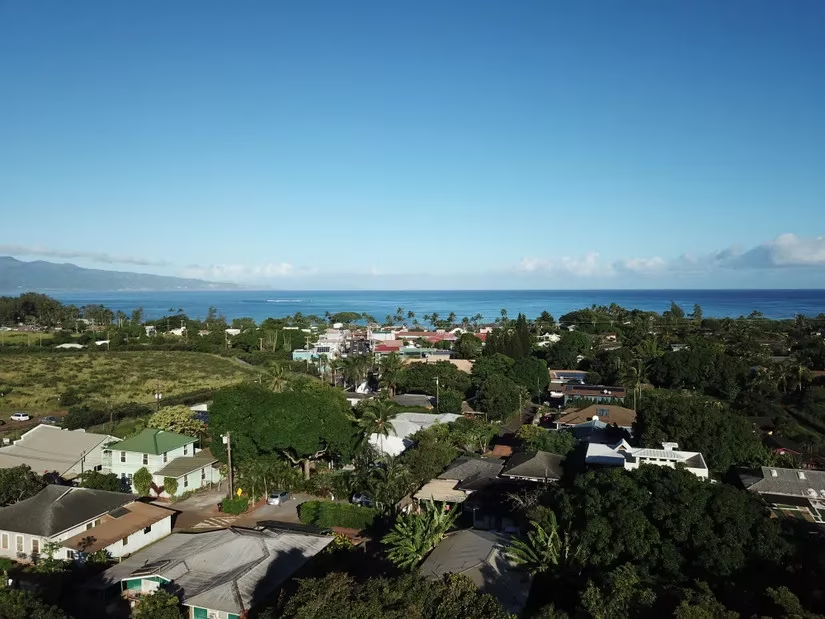
After crossing the continent, I landed on the tropical shores of Pa‘ia, Maui in Hawaii. With 2,688 people, Pa‘ia is a laid-back surf town where roosters strut down the main street and the scent of plumeria hangs in the air. I wandered into a tiny fish shack and bit into a taco so fresh it felt like the ocean had whispered to me. Have you ever tasted something that instantly transported you into the rhythm of the islands? The beaches here are uncrowded and serene, a perfect antidote to the bustle of Kihei or Lahaina. I spent golden afternoons watching windsurfers dance across the waves, feeling time slow to a standstill.
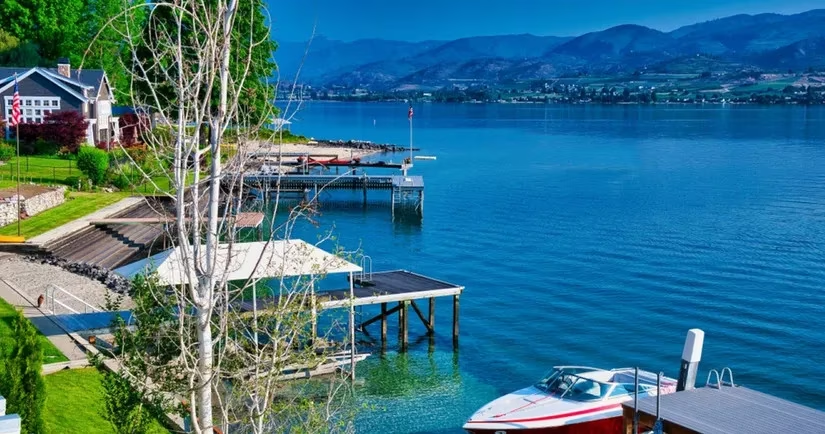
Back on the mainland, I discovered Chelan, Washington, a town that stretches 50 miles along a sparkling blue lake. Many call it the best small town in the state, and who am I to argue? I pedaled a bicycle through vineyards, sipping chilled Riesling as the sun dipped behind the Cascade foothills. Could there be a more perfect pairing than a local wine and a sunset over Lake Chelan? Afterwards, I hiked in the nearby Wenatchee National Forest, then returned to the waterfront for wood-fired pizza. With around 4,000 residents, Chelan manages to feel both vibrant and deeply tranquil.
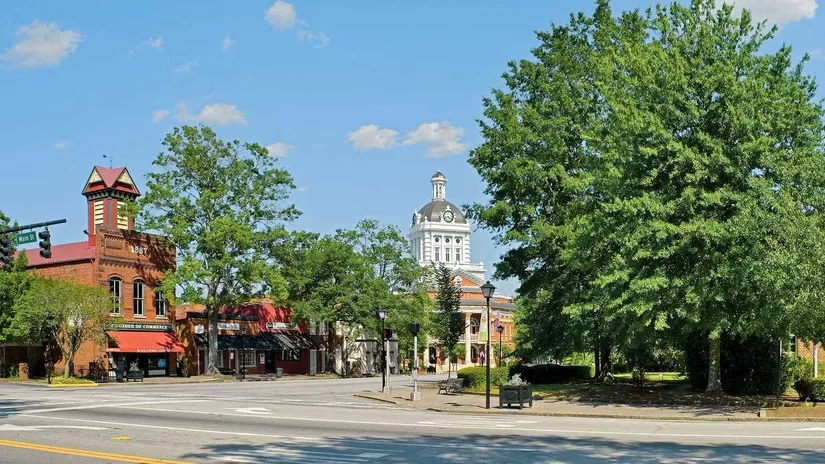
Dipping into the Deep South, I explored Madison, Georgia, a living museum of antebellum architecture. Strolling the oak-lined streets, I felt like I had walked into the 1840s—the town has poured its heart into historical restoration. I rummaged through over 150 antique shops, each packed with forgotten treasures. Isn’t it magical to touch a piece of the past and imagine the hands that held it first? Madison is part of Georgia’s Antebellum Trail, and its quiet squares and columned mansions tell stories of a complicated, captivating history.
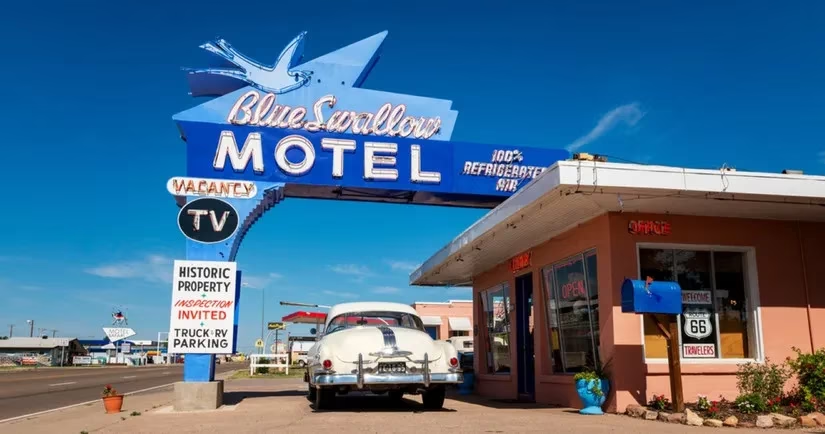
Finally, I pointed my wheels toward the Southwest and the legendary Route 66. Tucumcari, New Mexico sits just under 5,000 people, but it packs a century of nostalgia. I checked into the iconic Blue Swallow Motel, its neon sign buzzing warmly as the desert night fell. Who knew a roadside stop could transport you straight to the 1950s? I wandered past vintage murals and diners with red vinyl stools, the whole town humming with the ghost of America’s mother road. The nearby Tucumcari Mountains stood watch over a tapestry of Native history, reminding me that this land holds memories far older than the asphalt.
As I drove home, the odometer heavy with miles, I realized these ten towns had taught me something: the heart of America doesn’t beat in its megacities. It pulses in the quiet moments—a puffin’s dive, a porch overlooking the sea, a spring-fed fountain in the Ozarks, a neon flicker on Route 66. In 2026, when it’s so easy to rush, I found that the smallest dots on the map hold the biggest rewards. So, where will your curiosity take you?