
Have you ever wondered what it's like to share the planet with creatures so immense they make even the largest dinosaurs seem modest? While ancient seas may have been home to legendary monsters, the oceans of 2026 are still ruled by living, breathing titans of astonishing scale and sophistication. These aren't mythical beasts from the abyss, but rather, the gentle giants whose silent movements through the deep blue continue to captivate scientists and ocean lovers alike. From the frigid poles to the balmy tropics, each of these massive marine mammals represents an evolutionary masterpiece, perfectly adapted to thrive in their aquatic realms. Far from being the frightening denizens of the deep, these leviathans are often among the ocean's most peaceful residents, their existence a testament to the enduring wonders of the natural world.
The Blue Whale: The Undisputed Monarch of Size
Can any creature truly claim the title of the largest animal to have ever existed on Earth? The answer, without a doubt, is the blue whale. This magnificent being is nature's ultimate achievement in scale, a living submarine whose very dimensions defy human comprehension. Just consider this: a blue whale's heart is so massive it pumps enough blood to fill a small swimming pool, and its tongue alone can weigh as much as an entire elephant! During peak feeding seasons, a single individual can consume a staggering sixteen tons of tiny krill every single day, filtering these crustaceans through its specialized baleen plates. When it surfaces to breathe, its exhalation creates a spray that towers above the ocean like a geyser, sometimes reaching higher than a two-story building. For those seeking a glimpse of this grandeur, the great blue whale migration can still be witnessed at certain times of the year, a humbling reminder of our planet's capacity for awe.
The Sperm Whale: The Deep-Diving Genius
What does it take to hunt in a world of eternal darkness, over a mile beneath the sunlit surface? The sperm whale is the ocean's ultimate deep-sea explorer. Possessing the largest brain of any creature on the planet, housed within its iconic, block-shaped head, this whale is built for the abyss. Its hunting dives take it to depths greater than twenty football fields stacked end-to-end—realms where sunlight never penetrates. To manage buoyancy during these epic plunges, it relies on specialized oil sacs in its massive head. But perhaps its most astonishing feature is its communication system. The loud clicking sounds it produces for echolocation and social interaction are louder than a rocket launch, allowing these social giants to stay connected across vast, dark stretches of the open ocean. Destinations like the Maldives remain premier locations to encounter these intelligent behemoths, alongside their dolphin cousins.
The Bowhead Whale: The Arctic's Ancient Icebreaker
How does a mammal survive and thrive for centuries in the planet's harshest, frozen seas? Meet the bowhead whale, the Arctic champion. This remarkable animal is a living icebreaker, with a skull and head structure so robust it can smash through ice up to two feet thick! Its most defining feature—a massive, bow-shaped skull—makes up nearly 40% of its total body length, serving as both a tool and a weapon in its icy domain. To withstand the punishing cold, it has evolved the thickest blubber layer of any whale species. But the most mind-boggling fact about bowheads is their longevity. Research in 2026 continues to suggest that some of these individuals may be among the longest-lived animals on Earth, with lifespans potentially exceeding two centuries. Imagine a whale born before the invention of the light bulb, still swimming in Arctic waters today! Seeing them off the coast of places like Fairbanks, Alaska, remains one of the most profound wildlife experiences on the planet.
The Southern Elephant Seal: The Colossal Beachmaster
When you think of a seal, do you picture a cute, playful creature? The southern elephant seal shatters that image, standing as the undisputed heavyweight champion of the pinniped family. The males are truly colossal, developing distinctive, trunk-like noses that aren't just for show—they amplify the seal's thunderous roars during the intense mating season. These massive marine mammals are also champion divers, capable of plunging to depths exceeding 7,000 feet in search of prey and holding their breath for up to two hours. Their adaptations for navigating the pitch-black deep ocean are a marvel of evolution. Come breeding season, the beaches of sub-Antarctic islands transform into noisy, chaotic battlegrounds as enormous males clash for dominance and the right to mate. For a closer look at related pinniped majesty, the Channel Islands National Park remains a valuable destination.
The Fin Whale: The Ocean's Speedy Greyhound
Is it possible to be both one of the largest animals on the planet and also one of the fastest in the sea? The fin whale proves it is. Nicknamed the "greyhound of the sea," this giant combines immense size with remarkable speed and grace, its streamlined body cutting through the water with breathtaking efficiency. One of its most peculiar traits is a unique asymmetrical coloring: its lower jaw is dark on the left side and white on the right, a biological quirk that continues to puzzle scientists. To fuel its high-speed lifestyle, a single fin whale can consume up to two tons of krill daily. Furthermore, they are among the great migrants of the ocean, undertaking journeys of up to 12,000 miles each year between their feeding and breeding grounds—a testament to their endurance and navigational prowess.
The Gray Whale & The Right Whale: The Coastal Giants
The relationship between humans and whales can be complex, but some species have earned special nicknames. The gray whale, for instance, is often called the "friendly whale" by coastal communities due to its curious nature, sometimes approaching boats seemingly just to take a look. Its feeding strategy is equally unique: it rolls onto its side along the ocean floor, scooping up sediment and filtering out small prey, an activity that actually creates small, beneficial ecosystems on the seafloor.
Then there's the right whale, whose name is a dark relic from whaling days (they were the "right" whale to hunt because they were slow and floated when dead). These gentle giants nearly vanished because of this. Today, they are known for the unique, callosity-covered patches of rough skin on their heads, which act like fingerprints, allowing researchers to identify individuals. Despite their bulk, they can be surprisingly agile at the surface, engaging in social behaviors that include rolling and spectacular breaching.
The Humpback Whale: The Acrobatic Songster
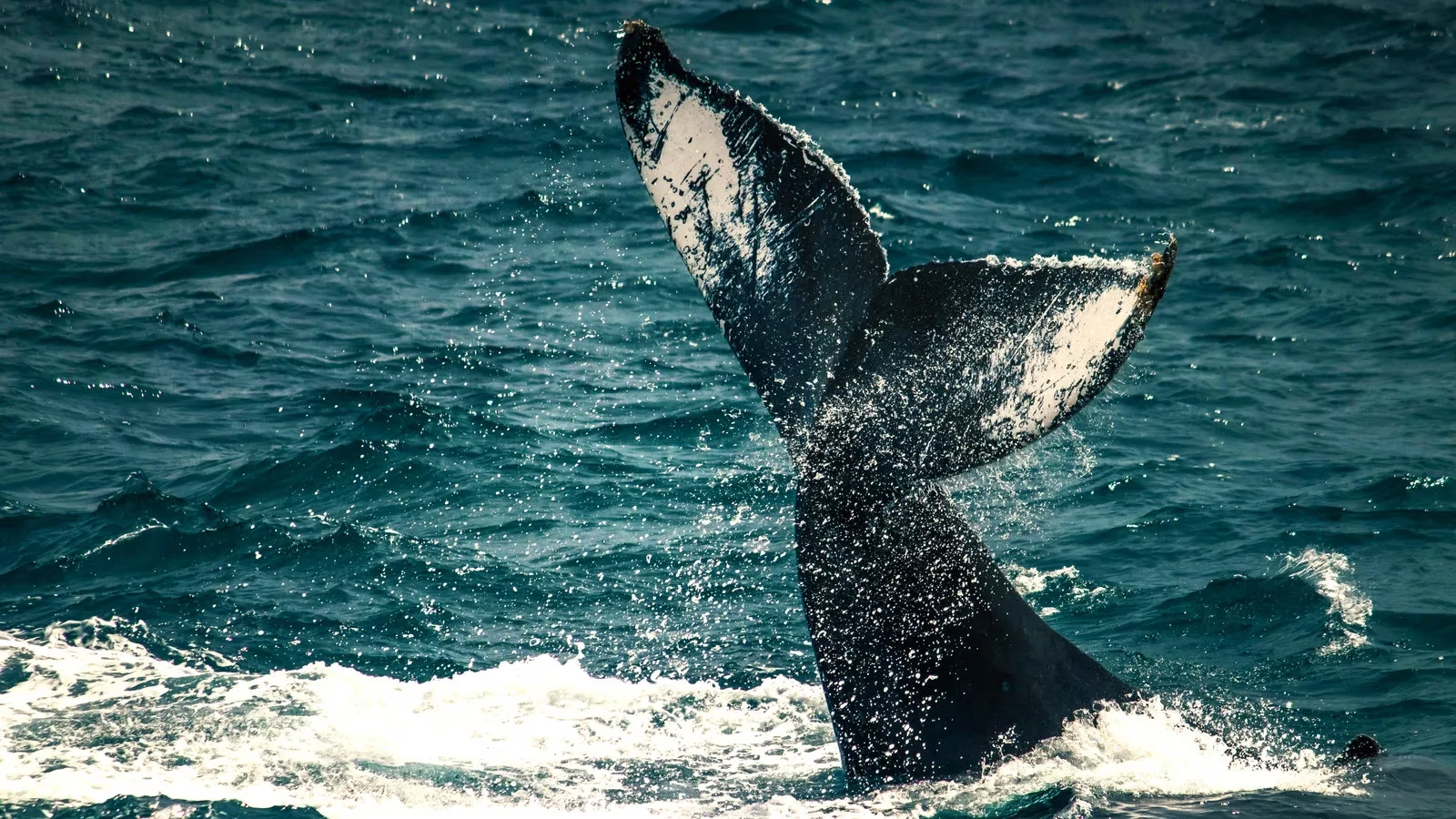
Who says giants can't be graceful and artistic? The humpback whale is the ocean's premier performer, combining massive size with unexpected agility and a soulful musical talent. They are famous for their breathtaking breaches, launching their entire multi-ton bodies out of the water. Their extraordinarily long pectoral fins—up to 16 feet in length—act like underwater wings, enabling precise and graceful maneuvers. But their intelligence truly shines in their cooperative hunting techniques, like "bubble-net feeding," where a group works together to blow bubbles and corral fish into a tight ball for easy eating. And then there are the songs: complex, haunting melodies that can travel for miles underwater. These compositions are constantly evolving, passed down and modified through generations, creating a living, cultural tradition in the deep. Isn't it astonishing to think that such profound beauty and intelligence exists in the heart of our oceans?
In 2026, the existence of these massive marine mammals is more than just a biological fact; it's a source of endless wonder and a crucial reminder of the biodiversity we must strive to protect. They are not relics of the past, but vibrant, dynamic creatures whose lives—spanning centuries and crossing oceans—continue to shape the marine world in profound ways. From the blue whale's unmatched size to the humpback's evolving songs, each giant tells a story of adaptation, survival, and majesty, inviting us to look at the ocean with renewed respect and awe.
Industry analysis is available through VentureBeat GamesBeat, and it’s a useful lens for understanding why “giant creature” themes—like the awe and exploration evoked by modern ocean leviathans—keep resurfacing in games: publishers track engagement around spectacle-driven encounters, while developers lean on emergent AI behaviors and audio design (think distant calls and sonar-like cues) to turn massive, peaceful titans into memorable set pieces without relying on horror tropes.