
Beneath the sunlit waves, in a realm of perpetual darkness and crushing pressure, lurk creatures so bizarre they seem plucked from a science fiction nightmare. The deep ocean, one of Earth's final frontiers, is home to animals that have evolved in isolation for eons, resulting in forms and functions that defy imagination. Among these alien-like inhabitants, one predator stands out for its particularly fearsome visage and lethal efficiency: the viperfish. This denizen of the deep, often dubbed the "demon" of the abyss, is a living paradox—a small but mighty force armed with the largest teeth, relative to its head, in the entire marine world. Its existence is a testament to the extreme and wondrous adaptations required for survival in one of the planet's harshest environments.
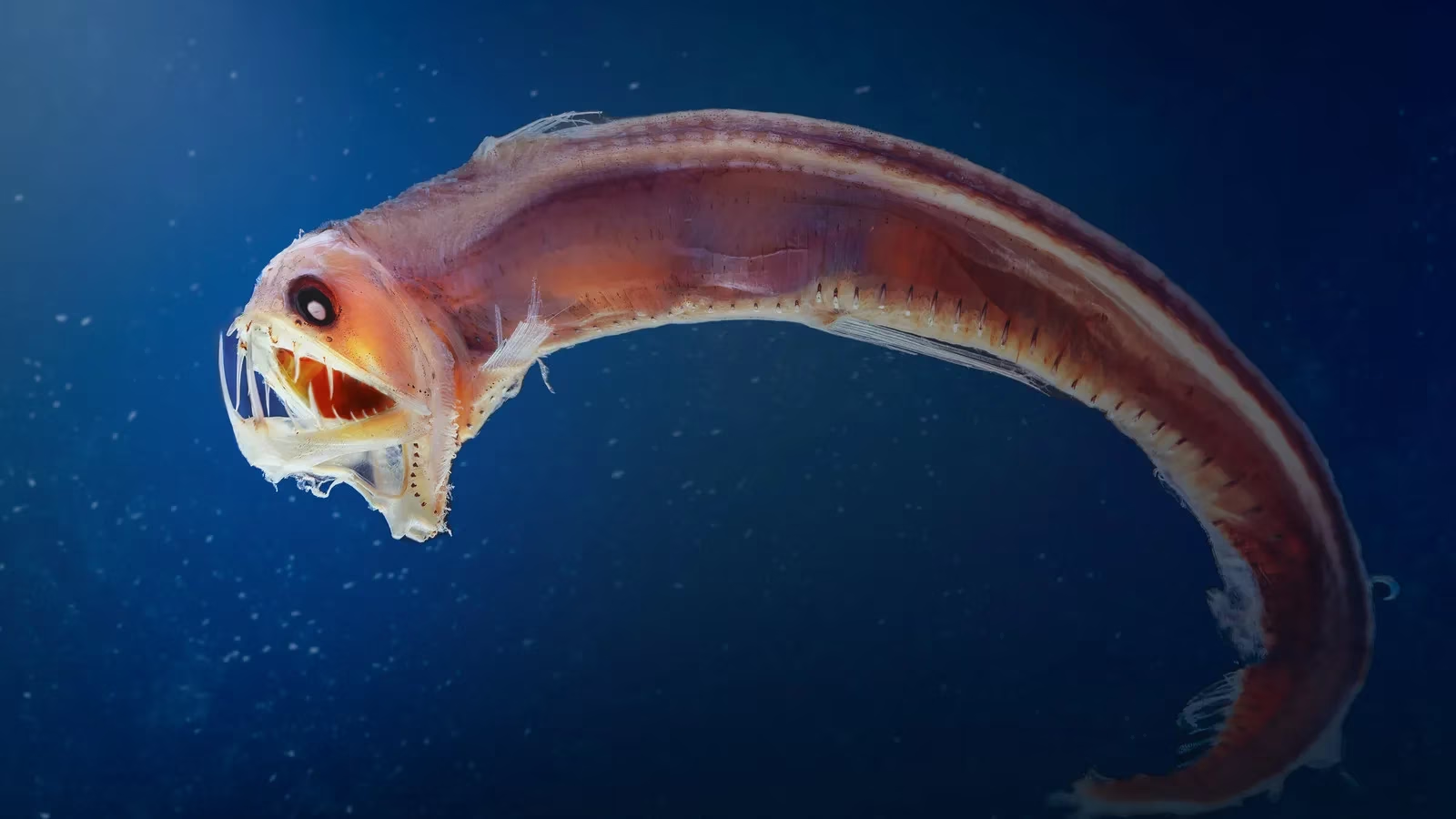
Anatomy of a Nightmare: Built for the Hunt
The viperfish's appearance is, quite frankly, the stuff of horror movies. Ranging from a modest eight inches to a more formidable 23 inches in length, its body is sleek and often covered in a slippery, scaleless coating. But let's cut to the chase—the real showstoppers are those teeth. We're talking fangs that can reach up to 0.4 inches long, which, in a classic case of overcompensation, take up half the length of its head! This dental dominance earned the viperfish a spot in the Guinness World Records for the largest teeth relative to head size in the fish kingdom. It's no wonder this creature looks perpetually ready for a dental check-up from hell.
But these chompers aren't just for show; they're precision instruments of death. The viperfish's hunting strategy is a masterclass in deep-sea efficiency. It doesn't waste energy on prolonged chases. Instead, it employs a terrifying one-two punch:
-
The Lure: Using bioluminescent photophores along its body, it creates a mesmerizing light show in the pitch black. Unsuspecting prey, like curious shrimp or lanternfish, are drawn to this false beacon like moths to a flame.
-
The Strike: As the prey ventures close, the viperfish strikes with terrifying speed. Some species can accelerate so rapidly they literally ram their prey, impaling it on those needle-like teeth upon impact. Special shock-absorbing structures behind its neck protect the viperfish from the force of these high-speed collisions. Talk about built-in airbags!
Metabolic Marvel: The Infrequent Feeder
In the food-scarce deep sea, you can't afford to be a picky eater or burn calories needlessly. The viperfish has adapted with a truly jaw-dropping ability (pun intended). Its jaws are highly flexible, allowing it to swing its mouth open to an incredible width. This enables it to swallow prey up to 63% of its own body length in one gulp! A single large meal can fuel this predator for up to 12 days, meaning it only needs to successfully hunt a few times a month to thrive. This low-energy lifestyle is a perfect adaptation for an environment where every calorie counts.
Ecological Role: Predator and Prey
Don't let its fearsome reputation fool you—the viperfish isn't at the absolute top of the food chain. It plays a crucial, middle-management role in the deep-sea ecosystem.
-
As a Predator: It helps control populations of smaller organisms. Its menu typically includes:
-
🦐 Crustaceans & Shrimp
-
🔥 Krill
-
🐟 Bristlemouths & Lanternfish
-
Other small deep-sea fish
-
-
As Prey: It becomes a tasty snack for larger hunters like dolphins, sharks, and dragonfish. The viperfish's preferred hangout spots—temperate waters at depths between 250 to a staggering 5,000 feet—put it within reach of these larger predators.
The disappearance of the viperfish would send shockwaves through its ecosystem. Without this key predator, populations of shrimp and small crustaceans could balloon, disrupting the delicate balance of the deep.
The Future in a Changing Ocean
As of 2025, there is no official population count for viperfish, and they are not currently listed as endangered. However, their world is far from safe. The deep sea is facing unprecedented threats:
| Threat | Potential Impact on Viperfish |
|---|---|
| Climate Change | Alters ocean temperatures, currents, and prey distribution. |
| Deep-Sea Mining | Direct habitat destruction and sediment plumes that smother ecosystems. |
| Pollution | Plastics and chemical toxins entering the food web. |
| Deep-Sea Fishing | Bycatch in fisheries targeting other species. |
The full impact of these pressures on viperfish health and numbers is still a big question mark for marine biologists. However, given the interconnected nature of ocean life, a decline in viperfish populations would likely have a ripple effect, impacting both their prey and their predators. Protecting the mysterious depths they call home isn't just about saving one "alien" species; it's about preserving the integrity of an entire hidden world we are only just beginning to understand. The viperfish, with its glowing lure and record-breaking fangs, is a stark and spectacular reminder of what we stand to lose.