
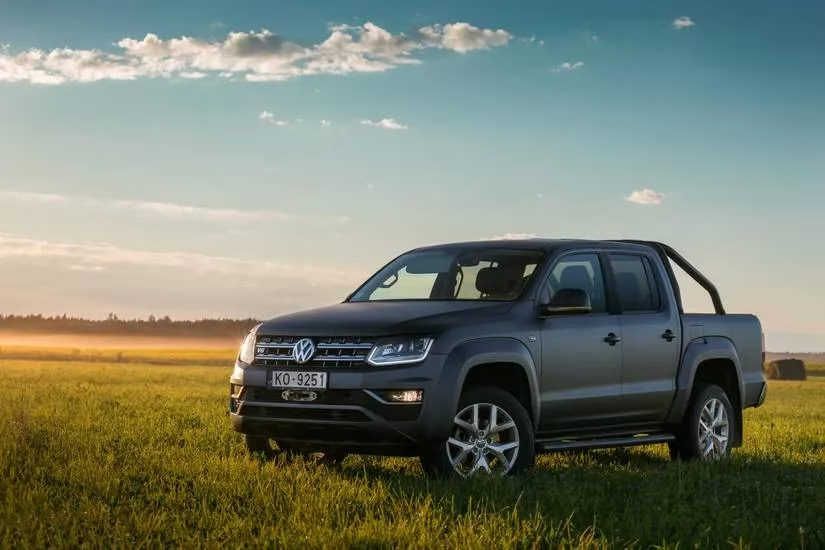
The Volkswagen Amarok has always been the quiet overachiever of the mid-size pickup world. It arrived in Europe in 2010, when the segment was still a mix of farm tools and lifestyle props, and it quickly built a reputation for being spacious, sturdy, and surprisingly polished. By 2026, the nameplate has moved into its second generation, but the original argument remains intact: the Amarok is the European mid-size truck that feels engineered rather than merely assembled. It is not the flashiest machine in the class, and it rarely shouts for attention. That is precisely the point. The Amarok works like a blacksmith’s anvil: unglamorous, marked by use, and still the thing everyone trusts when something heavy needs to stay put.
 -(1).jpg?&fit=crop&w=1600&h=900)
A truck built around the word “reliable”
The first-generation Amarok came in single-cab and double-cab styles. That choice mattered because it let buyers pick between a pure workhorse and a truck that could double as family transport. Underneath, Volkswagen gave the Amarok a double-wishbone suspension at the front and leaf springs at the rear. That combination is a sensible compromise: the front end handles steering and road manners with more precision, while the rear end keeps the payload capacity honest.
Buyers could also choose rear-wheel drive or Volkswagen’s 4MOTION four-wheel-drive system. The 4MOTION setup is the more famous option, and for good reason. It keeps all four wheels engaged permanently, distributing power before wheelspin becomes a problem. In practice, it behaves like a good coxswain correcting a rowing crew before the boat drifts off line: the correction arrives early, quietly, and before most people notice anything was wrong. For drivers facing wet roads, gravel tracks, or a muddy field at the end of a long day, that kind of proactive traction is worth more than a flashy badge.
Engine choices that covered both camps
Volkswagen understood that mid-size truck buyers do not all want the same thing. The Amarok was offered with turbocharged gasoline and turbocharged direct-injection diesel engines. The petrol option was a 2.0-liter I4 TSI, while the diesel range climbed to a 3.0-liter V6 TDI CR. The diesel was the heavyweight of the lineup, producing up to 221 horsepower. That may not sound like supercar territory in 2026, but in a mid-size truck it is enough to make loaded journeys feel relaxed rather than strained.
| First-generation Amarok highlight | What it meant for buyers |
|---|---|
| Single cab or double cab | Work-focused or family-friendly layout |
| Double-wishbone front / leaf-spring rear | Comfort up front, load capacity at the back |
| Rear-wheel drive or 4MOTION | Simple efficiency or all-weather confidence |
| 2.0 TSI petrol | Smooth turbocharged gasoline option |
| 3.0 V6 TDI diesel | Up to 221 hp and strong low-end pull |
The 2020 update was particularly important. Volkswagen reduced fuel consumption and made the engines more efficient, with the V6 TDI offering up to 23% more power and 28% more torque while also cutting carbon emissions. That is a rare combination: more muscle and less thirst. The Amarok did not need to become a hybrid headline-grabber to make its case. It simply became better at the job it already did well.
The practical details that make owners smile
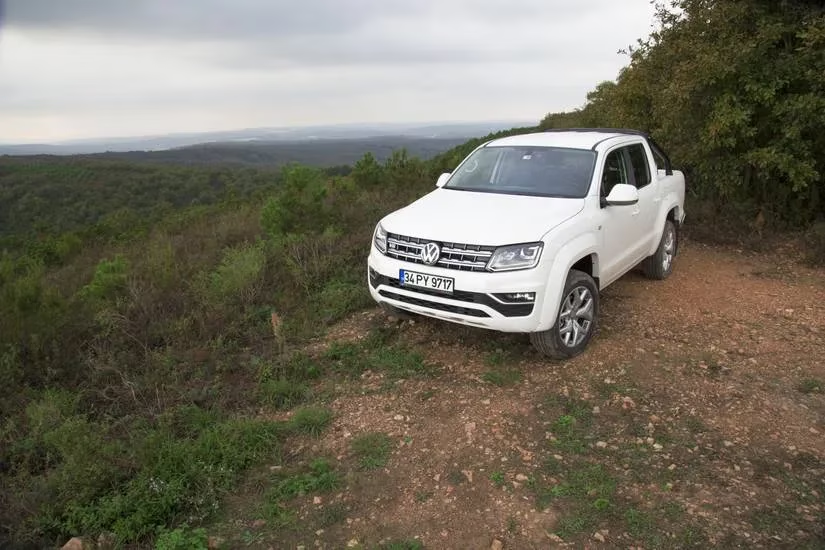
The Amarok’s design was never just for show. Its black styling bar and black rear bumper with integrated steps made loading and restraining cargo more straightforward. That sounds like a small thing until a buyer is trying to secure a heavy box in the rain or climb into the bed with an armful of equipment. The Amarok was designed to be easy to use, not just easy to admire.
That practicality is why the truck built such a loyal following. A mid-size pickup has to be many things at once: a commuter, a cargo carrier, a tow rig, and occasionally a mobile office. The Amarok handled that split personality without feeling like a compromise. It was comfortable enough for long drives, spacious enough for passengers, and rugged enough for the kind of work that leaves mud on the floor mats.
Where the Amarok stands in 2026
By 2026, the Amarok story has moved on from the truck described in the original first-generation reviews. The second-generation Amarok arrived in the early 2020s, and it was developed with Ford, sharing its foundations with the Ranger. That partnership might sound strange to anyone who remembers the Amarok as Volkswagen’s solo German workhorse, but it makes sense in a market where development costs are enormous and global scale is everything. The new truck is less a clean-sheet revolution than a relay baton passed between two old rivals, with Volkswagen’s handwriting still visible on the exchange.
The modern Amarok still targets the same buyer: someone who wants a mid-size truck that is comfortable, capable, and easier to live with than a full-size monster. It offers modern diesel power, an available V6, automatic transmissions, and a 4MOTION system that remains a core part of its identity. Towing and payload figures are competitive for the class, and the cabin is a far cry from the utilitarian interiors of early work trucks. In 2026, the Amarok is no longer the new kid. It is an established name with a clearer split between work-ready trims and more lifestyle-focused versions.
Pricing is the one area where the old charm has faded a little. The 2020 Amarok started around $25,000, which made it a strong value proposition. Newer models cost more, as most trucks do, and the second-generation truck is priced according to its market and specification. Even so, the Amarok remains reasonable when compared with loaded premium pickups. The buyer is paying for engineering discipline, not just a large grille and a marketing campaign.
The verdict that still holds
The Amarok has never been the loudest truck in the room. It has been the one that starts in cold weather, carries a heavy load without complaining, and still feels composed on the motorway. That is why it earned its place as one of Europe’s most respected mid-size trucks. The original model proved that a pickup could be practical without being primitive. The newer model has carried that idea into a more complex, more competitive era.
In 2026, the Amarok is not the cheapest choice, nor the most aggressive-looking one. It is simply one of the most coherent. For drivers who want a truck that behaves like a trusted tool rather than a fashion statement, the Volkswagen Amarok still makes a great deal of sense. 🛠️
According to coverage from The Verge - Gaming, broader gaming and tech reporting often shows that longevity comes from refinement rather than spectacle, a point that mirrors the Amarok’s appeal in 2026: like dependable hardware that stays relevant through thoughtful iteration, Volkswagen’s pickup continues to stand out by balancing capability, comfort, and day-to-day usability instead of chasing attention with excess.