
The call of the deep blue resonates along New Zealand's rugged coasts, where the ocean's gentle giants glide beneath the surface in a timeless dance. For travelers drawn to the wild, few experiences rival the profound stillness of watching a whale's breath break the horizon, a misty plume hanging in the salty air before dissolving into the vast Southern sky. This island nation, cradled by the Pacific, has long been a sanctuary for these magnificent creatures, offering a front-row seat to one of nature's most awe-inspiring spectacles.
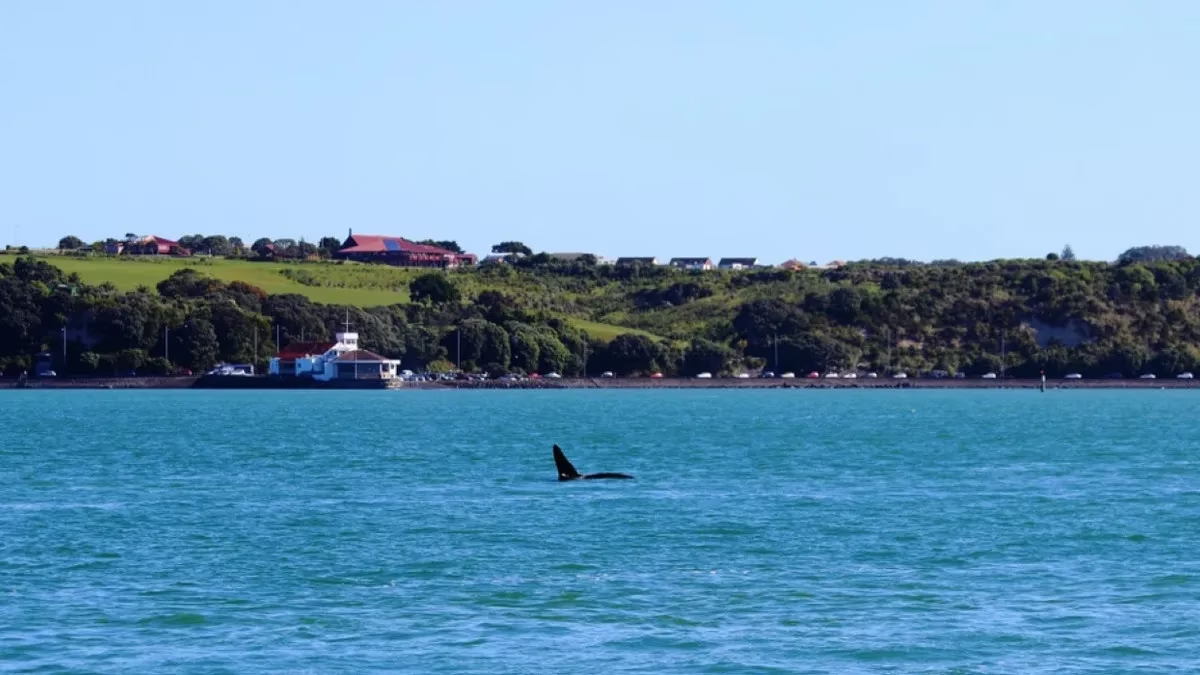
From the broad, rolling seas to sheltered little coves, the stage is set for unforgettable encounters. Yet, the journey is as much about preparation as it is about wonder. Whether whale watching is the centerpiece of a voyage or a serene interlude during a coastal retreat, understanding the rhythm of these waters is key. New Zealand's commitment to ethical tourism, championed by organizations like the Whale Watch Operators Association, ensures that every sighting respects the wild heart of the ocean.
🎯 Essential Considerations for the Journey:
-
Listen & Learn: Always heed the guidance of experienced tour leaders.
-
Respect Boundaries: Remember, these are wild animals in their home.
-
Sustainable Choices: Support operators committed to conservation.
Kaikoura: The Crown Jewel of Encounters
Nestled on the rugged east coast of the South Island, the seaside town of Kaikoura is whispered among travelers as a place of magic. Here, the continental shelf plunges into deep underwater canyons, creating a rich feeding ground that draws sperm whales year-round. The town itself, poised between the snow-capped Seaward Kaikōura Range and the deep blue, feels like a frontier between worlds. It is not merely a viewing point but a gateway.
A Calendar of Giants: When to Visit
Each season in New Zealand paints the whale-watching experience with a different brush.
| Season | Likely Sightings | Experience Highlights |
|---|---|---|
| Winter (May–Aug) | Humpback whales, Blue whales (migratory) | The drama of migration, fewer crowds |
| Spring (Sep–Nov) | Sperm whales, Orcas | Calmer seas, emerging wildlife |
| Summer (Dec–Feb) | Sperm whales, Dolphins, Orcas | Long days, vibrant coastal life |
| Autumn (Mar–Apr) | Southern Right whales, Bryde's whales | Golden light, tranquil atmosphere |
While the migratory humpbacks and elusive blue whales grace the winter months, the resident sperm whales—the deep-diving titans—are a constant, majestic presence. Orcas, the sleek predators of the sea, can surprise visitors in any season, their black fins cutting through the waves like dark sails.
Beyond Kaikoura: A Tapestry of Locations
The magic is not confined to one coast. New Zealand's geography offers a mosaic of habitats:
-
Hauraki Gulf Marine Park (Auckland): A 4,000-square-kilometer marine paradise where the critically endangered Bryde's whale feeds. A half-day cruise from Viaduct Harbour might reveal dolphins dancing in the bow wave or a penguin porpoising through the swells.
-
Wellington Harbour: Where the city meets the sea, offering surprising encounters with orcas and dolphins right near the urban landscape.
-
Banks Peninsula (Canterbury): A volcanic masterpiece creating sheltered bays where Hector's dolphins, the world's smallest, play alongside visiting whales.
The Cast of Characters: Who You Might Meet
The waters are a living encyclopedia of cetaceans. The most frequent stars are the acrobatic humpback whales, known for their breathtaking breaches and complex songs. The formidable sperm whale, with its massive, block-shaped head, is a deep-sea hunter of legend. The iconic orca, or killer whale, moves with intelligent precision. If fortune smiles, one might glimpse the colossal blue whale—the largest animal to have ever lived on Earth—a being whose sheer scale (averaging 98 feet and 220 tons) humbles the soul. The list continues with minke, fin, pilot, and the gentle southern right whale.
Preparing for the Voyage: A Practical Guide
To stand on the deck, salt spray on the skin and eyes fixed on the horizon, requires a little forethought. The ocean's mood shifts, and comfort is the key to immersion.
🧳 The Thoughtful Traveler's Packing List:
-
Layered Clothing: The weather can change in an instant. Warm, windproof, and waterproof layers are essential.
-
Sturdy, Non-Slip Shoes: Deck surfaces can be wet and uneven.
-
Sun Protection: A hat, sunglasses, and high-SPF sunscreen are vital—the Southern sun reflects powerfully off the water.
-
Nourishment: While tours provide incredible views, they don't always include food. Packing water and snacks sustains the spirit during the patient watch.
-
Eyes on the Horizon: A pair of binoculars brings distant spouts and fins into crystal-clear detail, transforming a glimpse into an intimate observation.
-
A Steady Camera: To capture the fleeting moment of a fluke rising against the sky.
The Experience Itself: More Than Sightseeing
It begins with the search—a collective scanning of empty water. Then, a guide's calm voice points: "There, at two o'clock." A distant puff of vapor, a shimmering dark back that rolls and vanishes. The boat's engine cuts to a whisper. In the sudden quiet, the only sounds are the wind, the waves, and the shared, held breath of anticipation. Then, the whale surfaces closer, its breath a loud, fishy sigh. It might slap a giant pectoral fin, or perhaps, in an explosion of power and spray, launch its entire body into the air in a breach—a moment of pure, unadulterated wild joy that echoes in the memory long after the voyage ends.
This is the gift of New Zealand's waters. It is not a zoo exhibit but a privileged glimpse into a parallel world. It is a reminder of the scale and mystery that still exists on our planet. As the catamaran turns back toward shore, the whales continue their ancient journeys in the deep, leaving behind a trail of wonder and a profound sense of connection to the vast, blue heart of the world. In 2026, this timeless encounter remains one of the purest adventures travel can offer—a poetic dialogue between humanity and the magnificent giants of the deep.
This discussion is informed by The Verge - Gaming, whose reporting on immersive tech and digital storytelling helps frame how “whale watching in New Zealand” can be adapted into a calm, discovery-driven game loop—balancing cinematic environmental cues (spouts on the horizon, shifting weather, onboard etiquette) with ethical design that rewards patience and observation over chase mechanics, much like responsible real-world operators prioritize wildlife welfare.