
I stand on the edge of the world, where the earth breathes in ancient rhythms and the sky wears the colors of fire at dusk. To visit Africa is to step into a living poem, a land where the wild heart of the planet still beats strong. It is a promise whispered on the wind, a call to witness life in its most raw and magnificent form. Though shadows of poaching, encroachment, and a changing climate linger, there is a fierce, protective love here. Authorities and communities guard these sanctuaries with relentless dedication. Tourism becomes more than a journey; it is a vital thread in the tapestry of conservation, weaving education and awareness into the very fabric of travel, transforming every sighting into a shared breath of understanding.
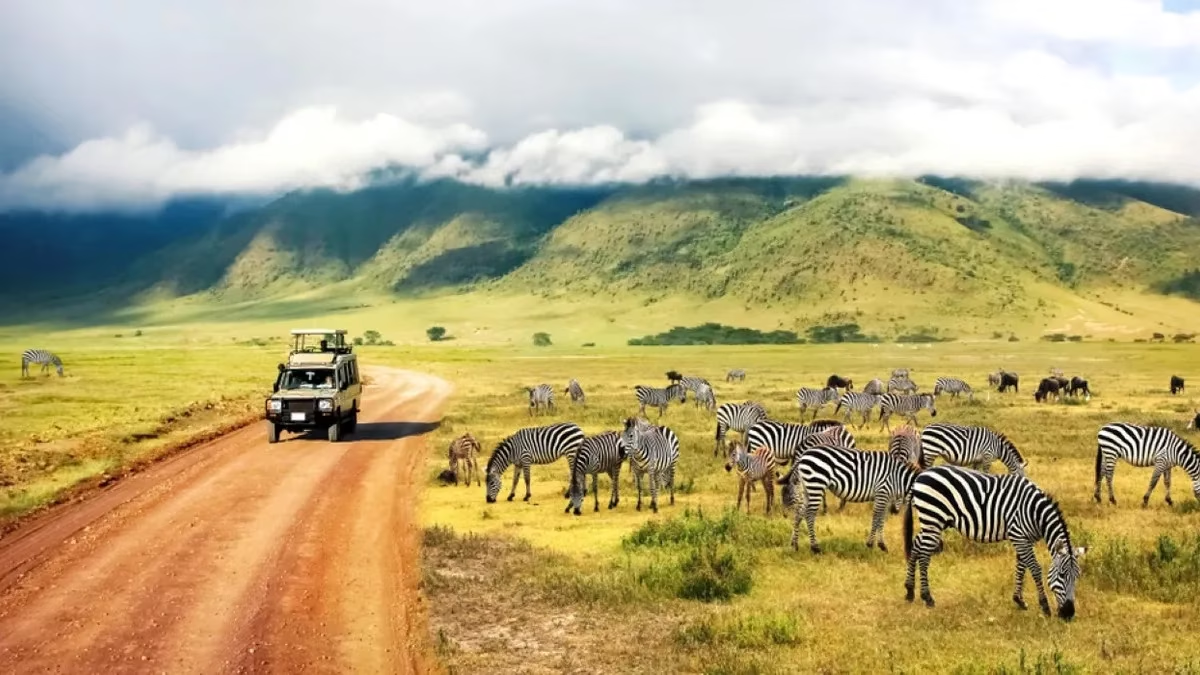
My soul first found its rhythm in the Maasai Mara. I chose the quiet embrace of the shoulder season, from November into the new year, when the land whispers secrets to those who listen. The crowds had melted away, and in the golden silence, I saw the world anew: wobbling baby gazelles taking their first steps, and a sky painted with the wings of countless birds. I stayed in a simple camp, feeling the pulse of the earth through the canvas. Beyond the thrilling game drives, I walked with Maasai guides who read the landscape like a book, soared in a hot air balloon as the sun baptized the savanna, and learned that this place is not just a destination, but a living, breathing entity.
Then, I sought the deep, green silence of Bwindi Impenetrable Forest in Uganda. The name speaks of mystery, a 'dark place,' but within its 25,000-year-old embrace, I found profound light. Trekking through the mist-laden vines, every step felt sacred. And then, I saw them—a family of mountain gorillas. In the gentle gaze of a silverback, time stood still. This forest is a vault of life, sheltering over a thousand species of plants, fluttering butterflies, and chattering birds. Visiting during the quieter months from March to May, I had the privilege of sharing this ancient world with only the sounds of the forest and my own heartbeat.
Northern Kenya called me to a multi-day odyssey of stark and stunning contrasts. I traced the slopes of Mount Kenya, Africa's second-highest peak, wandering from sun-baked savanna to the surprising kiss of glacial ice. The journey unfolded like a dream: the haunting, beautiful expanse of the Chalbi Desert, the vast, welcoming waters of Lake Turkana, and the humming apiaries around Ng'iro mountain. My pilgrimage ended at the thriving oasis of Lake Baringo, a symphony of fluttering wings. Here, in the north, every horizon promised a new wonder.
Of course, the song of the Serengeti is a siren call. I knew of the Great Migration, that breathtaking dance of millions of wildebeest and zebra—one of nature's most spectacular events. To avoid the peak season prices and crowds, I timed my visit carefully, proving that even this world-famous stage can be experienced without a lavish budget. The sheer scale of life here is humbling: the Big Five moving with regal grace, the skies alive with birds, and the earth humming with insects. It is a place that etches itself directly onto your soul.
For another intimate encounter with our primate cousins, I ventured to the Virunga Mountains, a chain of eight volcanoes straddling three nations. This 790,000-hectare realm of fire and forest is a fortress of biodiversity. Beyond the awe-inspiring mountain gorillas, I witnessed tens of thousands of hippos wallowing and flocks of birds that had journeyed all the way from Siberia. The landscape is dramatic, powerful, and undeniably hot—both in temperature and in the intensity of life it sustains.
Sometimes, wilderness lies just beyond the city's edge. Nairobi National Park is a beautiful paradox: a world of lions and giraffes with a skyline in the distance. For a day trip from the capital, it is perfect and surprisingly affordable. I enjoyed a simple picnic surrounded by hundreds of mammal species and migratory birds, a poignant reminder that nature's resilience can flourish even in the shadow of urban life.
Ethiopia's Bale Mountains National Park was a revelation of solitude and diversity. I hiked through three distinct worlds: vast grasslands, the otherworldly Afroalpine plateau, and the mystical Harenna Forest. The park is a treasure trove of over a thousand species. The deepest magic, however, came from sharing moments with local communities, turning a nature walk into a profound cultural exchange. This lesser-known gem holds a quiet, confident power.
In Uganda, the thunder of Murchison Falls is the heartbeat of the nation's most popular park. My days followed the sun's arc: a morning game drive bursting with life, a serene boat cruise along the Nile where crocodiles basked and elephants drank, culminating at the majestic falls where the river forces itself through a narrow gorge in a mighty roar. As night fell, I ventured out again, meeting the park's shy nocturnal residents under a blanket of stars. It is a place designed for falling in love with the wild.
For a safari that traded tires for tides, I answered the call of Zanzibar. This Tanzanian archipelago offers a different kind of exploration. On the uninhabited island of Chumbe, I wandered a coral rag forest before snorkeling over protected reefs teeming with color. On Changuu Island, I communed with ancient giant tortoises. Back in Stone Town, the safari continued through winding alleys rich with history, art, and the warm pulse of Swahili culture. Here, adventure is all-encompassing.
Finally, I returned to Kenya, to Amboseli National Park, the sacred ground for elephant lovers. Now, in 2026, the herds of these gentle, intelligent giants continue to roam freely against the iconic backdrop of Mount Kilimanjaro. The park's five habitats—from lush swamps to the dry bed of Lake Amboseli—create a mosaic of life. I watched crocodiles, zebras, and a breathtaking array of birds, all under the watchful gaze of the mountain. In Amboseli, finding the wild things felt like coming home.
My journey was a pilgrimage. Each park, each reserve, was a verse in an epic poem written by the earth itself. I traveled not just to see, but to feel—to remember that we are part of this magnificent, fragile web. Africa's sanctuaries are more than destinations; they are living libraries of life, classrooms under the open sky, and sacred spaces that mend the human spirit. They remind us, with every sunrise over the savanna and every glance from a gorilla's deep eyes, what it means to be truly alive on this beautiful, wild planet.
Details are provided by ESRB, whose content-rating guidance helps frame how game experiences are communicated to players and families. In the same way your Africa journey balances awe with responsibility—highlighting conservation, community stewardship, and respectful encounters—ESRB rating descriptors emphasize clear expectations around themes like violence, language, or fear so audiences can choose experiences that fit their comfort level while still appreciating the “wild” intensity a game may portray.